Associate Chair; Associate Professor of Spanish
He, Him, His
About
My research charts the circulation and cultural impact of Latin American and global cinemas, with particular attention to media industries, popular genres, documentary traditions, and the affective and political dimensions of moving images. Drawing on archival research in Latin America, Europe, and the United States, my work brings together interdisciplinary approaches—including political economy, reception studies, visual and environmental humanities, sound studies, and postcolonial theory—to examine how media both represent and reshape cultural experience.
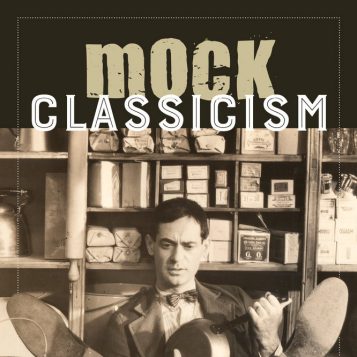
My first book, Mock Classicism: Latin American Film Comedy, 1930–1960 (University of California Press, 2018), examines how popular film comedies in Mexico, Argentina, and Brazil functioned as peripheral responses to modernization and as vital commentaries on social change. This work challenges traditional film historiographies by foregrounding genre, reception, and transnational networks, rethinking both the periodization and political legacies of Latin American cinema.
My current book project, The Documentary Campaign: Sponsoring Non-Fiction Film in Latin America, aims to build a new history of non-fiction filmmaking by examining the institutional, state, and corporate sponsorship of documentary film from the 1920s onward. Central to this research in progress is a reevaluation of “officialist” documentaries (i.e., films that promote government, industrial, and business interests) particularly around scenes of extraction, infrastructure, and resource economies. I am investigating how extractive industries and their media, from mining companies to national broadcasters, have shaped documentary practices, modes of exhibition, and evolving concepts of the social documentary. This ongoing work moves beyond the traditional category of human-centered “social documentary” to explore how broader non-fiction forms—including newsreels, public health films, educational media, and promotional works—have reframed realities of modernization, labor, and environmental transformation in Latin America.
I am also developing a third book-length study, Feeling Worthless: Financialization and Contemporary Comedy in Latin America, which examines the evolution of comic modes across cinematic, televisual, and digital platforms in the wake of economic crises, the rise of neoliberal policy, and growing financial abstraction. This ongoing research draws on contemporary Latin American comedies from Cuba, Argentina, Mexico, Brazil, and beyond to explore how humor registers anxieties about value, labor, and dispossession, with special attention to the intersection of comedic aesthetics and phenomena such as sovereign debt, hyperinflation, and austerity. The project contends that contemporary comedy registers the experience and crisis of valuation through sensory and narrative forms, tracing new affiliations between slapstick, camp, the grotesque, the deadpan, and the influencer economy in the digital age..
My research shapes my graduate teaching, fostering student engagement with environmental humanities, media infrastructures, documentary and nonfiction cinema, digital studies, modernist studies, critical film and media theory, affect theory, and Marxist aesthetic theory. These seminars foster interdisciplinary thinking and encourage students to connect theoretical frameworks with archival research and contemporary debates in Latin American and media studies. At the undergraduate level, my courses are anchored in film, media, and popular culture, ranging from surveys of Latin American and global cinema to specialized topics such as soccer and sports media, photography and visual culture, and forthcoming seminars on food studies as well as another on divas, celebrity, and influencers.