
Andrés Felipe Gonzalez Duran Dissertation Defense
Application of mineral chemistry and petrochronology to unravel the timing and genesis of mineral deposits in the American Cordillera
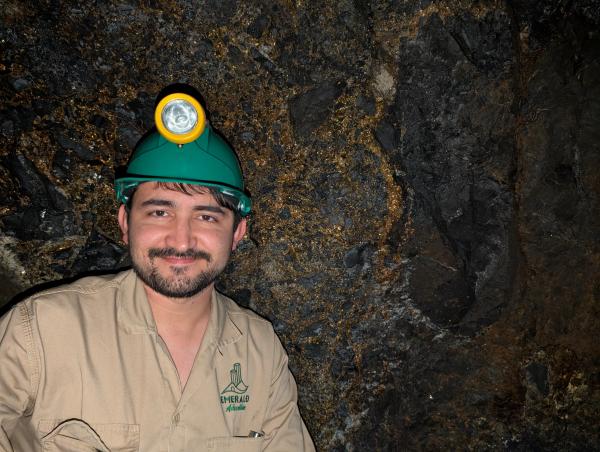
The American Cordillera hosts some of the world's most significant accumulations of copper, gold, and emeralds. However, the genetic relationship between different mineral deposit styles—specifically the transition between porphyry and iron oxide-apatite (IOA) or iron oxide copper gold (IOCG) systems—and the precise timing of mineralization in complex sedimentary basins remain poorly understood. This dissertation utilizes high-resolution mineral chemistry and in-situ petrochronology to decode the thermal, chemical, and temporal evolution of these world-class mineral systems. The research first investigates the transition between IOA and porphyry-style mineralization at the New Afton Cu-Au mine, British Columbia. By characterizing the trace element chemistry and textures of magnetite (Fe3O4), I demonstrate that magnetite is a dynamic recorder of overprinting hydrothermal events. The identification of widespread coupled dissolution reprecipitation (CDR) textures reveals that primary magmatic signatures are frequently modified by later fluid pulses, challenging traditional classification schemes and providing new textural criteria for exploration vectoring. The focus then shifts to the Eastern Cordillera basin of Colombia to resolve the long-standing debate regarding the timing of emerald mineralization. Through in-situ U-Pb dating of hydrothermal monazite and xenotime, I established the first direct, high-resolution age framework for emerald formation in both the Eastern and Western zones. The results link mineralization to episodic tectonic pulses during the Cretaceous and Paleogene, representing a paradigm shift from single-event genetic models to a more complex, time-transgressive mineralizing system. Finally, the study integrates multi-mineral analysis at the Llahuín Cu-Au-Mo deposit in Chile. By combining Random Forest Classification (RFC) of magnetite chemistry with titanite and rutile petrochronology, I reconstruct the transition between porphyry and IOCG-style features. The data suggest that these systems can form simultaneously within structural transition zones, governed by the magmatic sulfur budget and localized tectonic shifting. Together, this body of work demonstrates that the integration of micro-textural analysis with advanced mineral chemistry and petrochronology is essential for unraveling the complexity of Cordilleran metallogeny. The findings provide robust tools for mineral exploration and advance our fundamental understanding of how the Earth’s crust concentrates metals and gemstones throughout tectonic cycles.
| Building: | 1100 North University Building |
|---|---|
| Event Type: | Lecture / Discussion |
| Tags: | Earth And Environmental Sciences |
| Source: | Happening @ Michigan from Earth and Environmental Sciences |
