William H. Sewell Jr. Collegiate Professor of Sociology; Weiser Family Professor in European and Eurasian Studies
About
Geneviève Zubrzycki is a comparative-historical and cultural sociologist who studies nationalism and religion; collective memory and national mythology; and aesthetics and politics. Her research examines how national identities are constructed, experienced, transformed, and remembered through symbols, rituals, material culture, and other cultural forms.
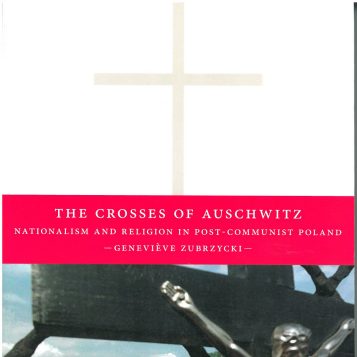
A central concern of Zubrzycki’s scholarship is the relationship between nationalism and religion. In The Crosses of Auschwitz: Nationalism and Religion in Post-Communist Poland (Chicato 2006), she analyzed the reconfiguration of the relationship between Polishness and Catholicism after the fall of communism. By examining conflicting Polish and Jewish memories of World War II and the international conflict over the presence of Christian symbols at Auschwitz-Birkenau, the book explored how struggles over memory and religious symbols become struggles over the meaning and boundaries of the nation. It was translated into Polish in 2014 (Nomos).
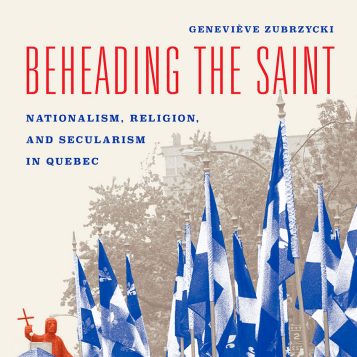
In Beheading the Saint: Nationalism, Religion and Secularism in Quebec (Chicago 2016), Zubrzycki examined the discursive, ritual, and visual formation of a Catholic French-Canadian ethnic identity in the 19th century and its transformation into a secular Québécois national identity in the second half of the 20th century. Extending the analysis to the present, the book explored the role of Québécois nationalism in debates over immigration, religious symbols in the public sphere, and the politics of cultural heritage, shedding light on similar debates elsewhere in the world. The book received multiple national and international awards and was translated into French and Polish.
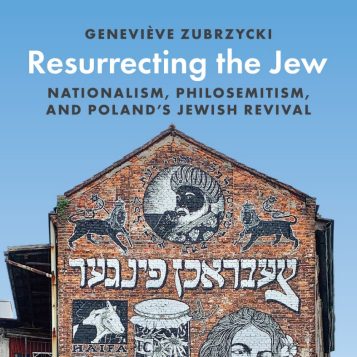
Zubrzycki pursued her analysis of religion’s role in symbolic boundary-making in Resurrecting the Jew: Nationalism, Philosemitism and Poland's Jewish Revival (Princeton 2022). Based primarily on participant observation and interviews, the book examines the post-1989 revival of Jewish communities in Poland alongside non-Jewish Poles’ growing interest in Jewish history, culture, and heritage. It asks what this seemingly paradoxical fascination with Jewishness reveals about contemporary Polish identity, memory, and ideas of the nation. Resurrecting the Jew received the prestigious Wayne S. Vucinich Prize from the Association for Slavic, East European, and Eurasian Studies and the Rachel Feldhay Brenner Book Award from the Polish institute of Arts and Sciences of America. It appeared in Polish in 2026.
Zubrzycki is also contributing to broader conversations about the relationship between religion and nationalism. Together with colleagues, she is currently editing The Oxford Handbook of Religious Nationalism, bringing together scholarship on the historical, cultural, political, and social forms through which religion and nationalism intersect across different regions and traditions.
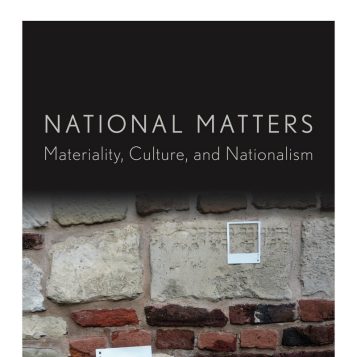
Alongside this work, Zubrzycki has developed her interest in the material and aesthetic dimensions of nationalism. Her edited volume National Matters: Materiality, Culture and Nationalism (Stanford 2017) brought together scholarship on the material forms through which national identities are produced and experienced. Her current book project, The Aesthetics of Nationalism, builds on this work to examine how nationalism becomes a lived and sensory experience—how people come to see, hear, touch, wear, taste, and enact the nation. Drawing on cases from around the globe, the project explores the role of aesthetics in creating, sustaining, and contesting national attachment.
Awards
Zubrzycki’s books and articles have received prizes from the American Sociological Association’s sections on Sociology of Culture, Political Sociology, Sociology of Religion, and Collective Behavior and Social Movements; the International Society for the Sociology of Religion; the Society for the Scientific Study of Religion; the Canadian Sociological Association; the Association for Slavic, East European and Eurasian Studies; the Polish Institute of Arts and Sciences of America; and the Polish Studies Association.
In 2021, she was awarded a Guggenheim Fellowship in recognition of her “prior achievements and exceptional promise.” She also received the Bronisław Malinowski Prize in the Social Sciences from the Polish Institute of Arts and Sciences of America for her “widely-recognized research contributions to the social sciences, particularly as they relate to Poland and East-Central Europe.”
Leadership and Professional Service
Zubrzycki is Director of the Weiser Center for Europe and Eurasia and the Copernicus Center for Polish Studies at the University of Michigan. She previously directed the Center for Russian, East European and Eurasian Studies (2014–20) and the Center for European Studies (2016–24).
She has served as elected Chair of the American Sociological Association’s Culture Section (2014–16), on the councils of the ASA sections on Sociology of Religion and Political Sociology, and as Secretary-Treasurer of the ASA’s Comparative-Historical Section. She has also served on a range of book, article, nominations, and other professional committees within the ASA and the Association for Slavic, East European and Eurasian Studies.
From 2016 to 2024, Zubrzycki co-edited Comparative Studies in Society and History, an interdisciplinary journal published by Cambridge University Press. She has served on the editorial committees of several sociological journals and has held visiting appointments at the École des Hautes Études en Sciences Sociales and Sciences Po in Paris.
Recent Articles (selection)
2026 “Durkheim, Religion, and the Sociology of Nationalism,” in Marcel Fournier and Paul Carls (eds), The Elgar Companion to Émile Durkheim.
2025 “Religious Nationalism in the 21st Century.” Sociology of Religion: A Quarterly Review.
2023 “The Social Context of De-assimilation and Its Challenges.” Contemporary Jewry, 43: 779-788
2022 “Jan Gross’ Neighbors and Poland’s Narrative Shock.” The Jewish Quarterly Review, 112:2, 234-238.
2021 “Theodicy and Crisis: Explaining Variation in US Believers' Faith Respeonse to the COVID-19 Pandemic.” Sociology of Religion: A Quarterly Review. (With Kraig Beyerlein and David Nirenberg).
2020 “The Comparative Politics of Collective Memory.” Annual Review of Sociology, 46:175–94. (with Anna Woźny)
2020 “Quo Vadis, Polonia? On Religious Loyalty, Voice, and Exit.” Social Compass, 67:2.
2019 “National Culture, National Identity, and the Culture(s) of the Nation,” in Laura Grindstaff, Ming-cheng Lo and John R. Hall (eds.) Routledge Handbook of Cultural Sociology, 2nd edition, New York: Routledge, 506-514.
2017 “The Politics of Jewish Absence in Contemporary Poland,” Journal of Contemporary History, 52:2, 250-277.