About
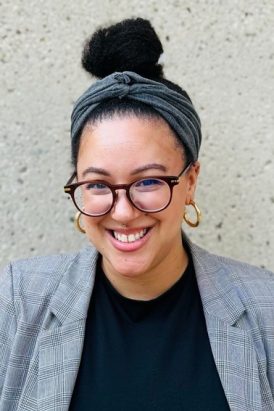
Mel Monier is a PhD candidate in the Department of Communication and Media. Mel is a Rackham Merit Fellow and is also completing a graduate certificate in Digital Studies. Mel specializes in mixed-methods approaches, incorporating interviews, focus groups, surveys, archival and historical data, community-engaged and experimental methods into my research. Their research explores the intersections between digital media, identity, and embodiment across three areas: digital labor, online dating, and self-representation online. They are a member of Dr. Oliver Haimson's Community Research on Identity and Technology (CRIT) Lab and Dr. Apryl William's Bodies, Identities, Intimacies, and Technologies (BIIT) Lab. Their work has been published in Social Media + Society, Communication, Culture & Critique, New Media & Society, as well as a prize-winning publication in Transformative Works and Culture.
In addition to research, Mel is extremely passionate about inclusivity and teaching. They are currently a Graduate Student Facilitator at the Center for Socially Engaged Design (C-SED) and have been a Lead Graduate Student Instructor for COMM 101 (The Media Past and Present) and Graduate Student Instructor for COMM 355 (Critical Internet, a LSA Upper-Level Writing Requirement). They have also completed the Graduate Teacher Certificate Program, and the Rackham Diversity, Equity, and Inclusion Certificate Program (with an emphasis on DEI and teaching).
Mel’s MA thesis focused on Black beauty vloggers on YouTube, analyzing the intersections of race and digital feminized and aspirational labor. Their dissertation project is an exploration of media representations of trans masculine pregnancy over the last 25 years. Mel engages with media representations of trans masculine pregnancy including archival news media, blog posts and online forums, social media posts, popular press, movies, and TV. Using images of pregnant trans masculine bodies situated in their social, cultural, and political contexts, they explore how these representations have shaped how the American public engages with and understands transness, trans masculinity, and trans masculine pregnancy.