
Irene Hochgraf-Cameron, osteology inventory specialist at UMMAA, will co-host an American Association of Biological Anthropology webinar on unprovenienced human remains on Thursday, December 11, at noon EST.
The webinar, Tracing Forgotten Histories: Identifying Unprovenienced Human Skeletal Remains and Establishing Best Practices for Their Ethical Treatment, is a two-hour panel discussion.
The availability of provenance and provenience data necessary to connect skeletal remains to specific descendant communities is inconsistent across skeletal collections, particularly those housed in higher education teaching laboratories. Many such collections originate from 19th- and 20th-century excavations, research, or “donations.” Extended curation periods and repeated use in teaching have often resulted in the loss or absence of critical provenience data. This lack of documentation has left faculty, students, and the remains themselves in a state of uncertainty regarding their appropriate disposition, including repatriation, reburial, or continued use in education. This webinar developed from a workshop by same name at last year’s AABA meetings in Baltimore. Panelists will share their experiences in working with and identifying unprovenienced human remains, along with their perspectives on establishing ethical stewardship in these challenging cases. This webinar will emphasize human skeletal remains in teaching or museum collections for which panelists have successfully traced provenience data. Multidisciplinary methodologies will be shared by panelists that combine osteological analysis with provenance research to reconstruct the histories of unprovenanced human remains. This approach integrates traditional osteological analysis with less conventional methods, including institutional archive research, handwriting analysis, identifying idiosyncrasies of anatomical supply companies, taphonomy, and comparative data.
This webinar aims to create space for biological anthropologists to build community on this important topic. Therefore, participants are also invited to ask questions or share their own tools and successes to ethical teaching practices, handling remains when consent can never be obtained, and collaborating with university and museum administrators, faculty, and students who have a vested interest in the ethical treatment of human remains.
This webinar is free and open to the public.
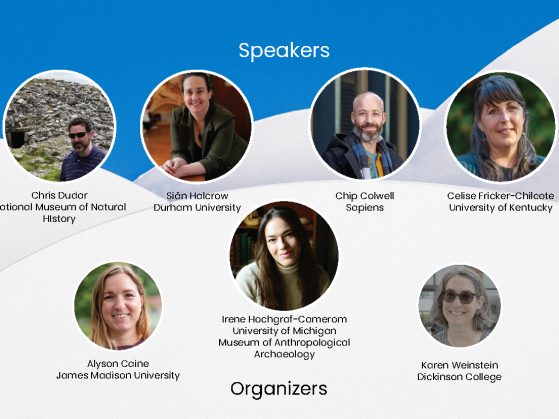
Speakers: Chris Dudar, National Museum of Natural History; Siân Halcrow, Durham University; Chip Colwell, Sapiens; Celise Fricker-Chilcote, University of Kentucky
Organized by Alyson Caine, James Madison University; Irene Hochgraf-Cameron, University of Michigan Museum of Anthropological Archaeology; and Karen Weinstein, Dickinson College
