
2019 NCID Scholar-in-Residence – W. Carson Byrd
- All News
-
- Faculty News
-
- Michigan Sociologists Awarded Top Prizes at Annual ASA Conference
- Howard Schuman's new book explores how generations share memories of formative experiences
- Barbara Anderson Named Chair of US Census Scientific Advisory Committee
- Kiyoteru Tsutsui & Alwyn Lim Publish New Book
- Faculty Talk About their Winter Classes!
- Fatma Muge Gocek Edits New Book Series
- Three New Faculty to Join the Department in 2016
- Jaeeun Kim Publishes New Book
- Faculty Named International Institute Directors
- Meet Professor Göçek
- Geneviève Zubrzycki Publishes New Book
- Professor Armstrong Awarded 2016 Faculty Recognition Award
- Professor Levitsky Awarded 2016 Class of 1923 Memorial Teaching Award
- Professor Pedraza recognized by the Golden Key International Honour Society
- Michigan Sociology Recognized as Top in US
- Karin Martin Named Department Chair
- Professor Martin Awarded 2017 Harold R. Johnson Diversity Service Award
- Geneviève Zubrzycki Edits New Book
- The Cultural Pasts of Poland
- Custodial Parole Sanctions and Earnings after Release from Prison
- Jason Owen-Smith Featured in Forbes
- Professor Emeritus of Sociology Dr. Ren Farley featured in the Detroit Free Press
- University researchers concerned by changes to Title IX proposed by current Department of Education
- Erin A. Cech featured in Harvard Business Review
- Mark Mizruchi Featured in St. Louis Post-Dispatch
- New Faculty, Students, and Staff
- Letter from the Chair
- Jeff Morenoff featured on Michigan Radio
- Refuting Charles Murray
- Karin Martin featured in The Washington Post
- Erin Cech Featured in Slate
- Wayne Baker featured in Harvard Business Review
- Jeffrey D. Morenoff and Anh P. Nyugen Featured Washington Top News
- Jerry Davis Featured in CBS News
- Sarah Burgard and Lucie Kalousova featured in Business Insider
- Jeffrey Morenoff Interview on Michigan Radio
- Jason Owen Smith featured in The Columbus Dispatch
- William Axinn featured in Michigan News
- Geneviève Zubrzycki Discusses Controversial Legislation in Poland
- Geneviève Zubrzycki featured in The Conversation
- Elizabeth A. Armstrong featured in The Chronicle
- Barbara Anderson featured on BBC Radio
- Geneviève Zubrzycki featured on WNYC
- Geneviève Zubrzycki featured in Times Higher Education
- Luis Sfeir-Younis Featured in The Michigan Daily
- Sandra Levitsky Given Golden Apple Award
- Alford A. Young, Jr. featured on Make It Plain
- Alford A. Young, Jr. featured on NPR
- Alexandra Murphy featured in Slate
- Alexandra Murphy talks Suburban Housing in Slate
- Contested Spaces in Contemporary Turkey: Environmental, Urban and Secular Politics
- Getting From Here to There
- The Growing College Graduation Gap
- Employers disclose new pay data, and some salaries are strikingly low
- The Reciprocity Ring: When Giving At Work Becomes An Act Not A Check
- Elizabeth Armstrong Gives Keynote Lecture at Diversity Summit
- How and Why We Write the History of the Social Sciences
- Watch Sandra Levitsky's Golden Apple Award Lecture
- #AsiaNow Speaks with Jaeeun Kim
- Sarah Burgard featured in Slate
- Elizabeth Armstrong featured in The New York Times
- Inflexible jobs also make non-parents miserable
- Alexandra Murphy receives teaching award from LSA
- New Book by Kiyoteru Tsutsui
- Elizabeth Bruch's Study Featured in CNN
- New Book by Jason Owen-Smith
- Silvia Pedraza featured in the Havana Times
- Jaeeun Kim, Assistant Professor of Sociology, Publishes Article
- Fabian T. Pfeffer featured in The New York Times
- Meet Our New Sociology Faculty
- Dwight Lang featured in The Chronicle of Higher Education
- Letter from the Chair
- Elizabeth Armstrong, Professor of Sociology, Featured on The Chronicle of Higher Education
- Jason Owen-Smith, Professor of Sociology, Featured in Inside Higher Ed
- Barbara Anderson, Professor of Sociology and Population Studies, Featured on Michigan Radio
- Sandra Levitsky receives Thurnau Professorship
- Geneviève Zubrzycki, Professor of Sociology, Featured in Forbes
- The Institute for Research on Women and Gender, Law School and Department of Sociology Hosted a Title IX Comment Writing Event
- Awards and Congratulations
- Jason Owen-Smith, Professor of Sociology, Featured on Stateside
- Richard Lempert, Professor Emeritus of Law and Sociology, Featured in The Guardian
- Elizabeth Armstrong Awarded Carnegie Fellowship
- Burgard, Kim, & Pfeffer Promoted
- Assistant Professor Neil Gong Discusses Mental Health and Housing
- 2019 NCID Scholar-in-Residence – W. Carson Byrd
- Neil Gong and Xiaohong Xu Discuss Presidential Candidate Andrew Yang
- Pamela J. Smock Co-Authors Article for Journal of Marriage and Family
- Professor Sarah Burgard and Recent Graduate Lucie Kalousova Co-Authored an Article on the Current Moment and COVID-19
- Assistant Professor Neil Gong Co-Authored an Article for CalMatters
- Celeste Watkins-Hayes Joins Michigan Sociology
- Congratulations to Collegiate Professor Celeste Watkins-Hayes
- Professor Somers Publishes New Article in The Guardian
- New Book by Fatma Müge Göçek
- Assistant Professor Erin Cech recently quoted in Science Magazine article
- Can Abolition Work in an Age of Right-Wing Extremism?
- Professor Jason Owen-Smith Quoted in the Chronicle
- Geneviève Zubrzycki receives the prestigious Guggenheim Fellowship
- Bourdieu event at University of Chicago
- Alford A Young, Jr. Named Department Chair
- 2021 Awards
- Associate Professor Fabian Pfeffer Co-Authored New Publication
- 2020 Awards
- U-M Sociologist Alexandra Murphy Focuses on U.S. Transportation Equity
- University Responses To Sexual Assault (URSA) Hosts Multidisciplinary Workshop
- Stone Center For Inequality Dynamics Receives $8M In New Funding Fall 2021
- U-M Sociologists and ISR Researchers Named Among the "Top 2% Scientists" by Stanford University
- Professor Geneviève Zubrzycki Releases Newest Book
- Juan Delgado Joins U-M Sociology as a LSA Postdoctoral Collegiate Fellow
- Professor Alford Young Named as President of the Association of Black Sociologists
- U-M Sociology Wins Big at 2023 ASA Awards
- U-M Sociology Faculty receive Major Accolades over the Summer
- U-M Sociology Welcomes New 2023 Faculty
- U-M Sociology Prof. Geneviève Zubrzycki Wins Highest ASEEES Award for Latest Publication
- Soc Department Chair Elizabeth Armstrong's research team chosen for U-M's new Boost Program
- U-M Sociology Professors Armstrong and Young Appointed Senior Fellows by the Michigan Society of Fellows
- Remembering Professor Xiaohong Xu
- Remembering John Edwin Knodel
- University of Michigan Sociology Professor Alexandra Killewald Elected to the American Academy of Arts and Sciences
- U-M Soc Professor Greta Krippner Wins 2024 John Dewey Award for Excellence in Undergraduate Teaching
- U-M Research Team ft. Professor Sarah Burgard Wins LSA Meet the Moment Initiative Grant for Health Equity Research
- Remembering Gayl Ness
- U-M Sociology Winners at 2024 ASA Awards
- Remembering Shirley Hatchett: Shaper of the First National Survey of Black Americans and U-M Sociology Alumna
- Jaeeun Kim Elected Non-Resident Permanent Fellow at the Wissenschaftskolleg zu Berlin
- Matthew Sullivan and the Expansion of First-Gen Student Support at U-M Sociology & LSA
- University of Michigan Sociology Professor Celeste Watkins-Hayes Elected to the American Academy of Arts and Sciences
- Professor Alford Young Elected as Next ASA President
- Mary Shi Wins 2025 ASA Dissertation Award
- Remembering Mark A. Chesler
- Population Studies Center Highlights Professor Pamela J. Smock’s Research on the Economic Impacts of Divorce
- University of Michigan Leads in 2025 ASA Awards
- Professor Sarah Burgard Named Inaugural James S. House Collegiate Professor of Sociology and Population Studies
- U-M Sexual Citizenship Project Tackles College Sex Education and Expands Student Participation
- Michigan Sociology Headed to 121st Annual ASA Meeting in NYC
- U-M Sociologists Scheduled to Present Diverse Research
- U-M Represented in Multiple 2026 ASA Award Sections
- Remembering Reynolds Farley: An Expert on Detroit, the Census, and America’s Racial Divide
- Graduate Student News
- Undergraduate News
- Alumni News
- Newsletter
- Search News
- Archived News
- All Events
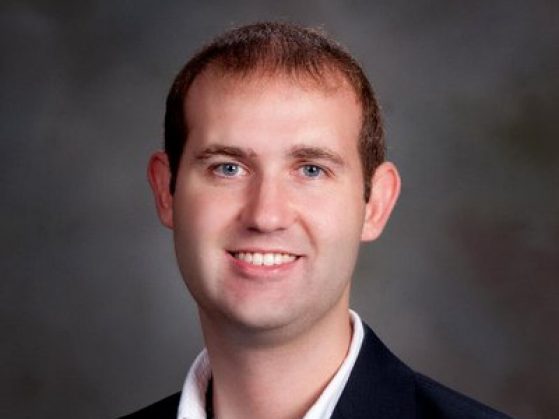
The NCID Scholar-in-Residence program provides an opportunity for senior diversity scholars to pursue their research and writing at the University of Michigan. Scholars will be a part of a vibrant intellectual community and have the opportunity to interact with junior faculty and postdoctoral fellows, senior NCID faculty fellows, graduate students, as well as colleagues in their affiliated academic units.
The Department of Sociology is proud to announce W. Carson Byrd as this year's NCID Scholar-in-Residence. Read below to get to know more about Carson's research.
Please describe your research and the ways your project is interesting.
My research examines the persistence of social inequalities in education, particularly racial inequality in higher education. I often focus on how colleges and universities can simultaneously operate as engines of social mobility and inequality for students, and why our institutional efforts may not have the desired outcomes of producing more racially equality. For example, in my first book, Poison in the Ivy, I examined the campus lives of students to identify how their social interactions with each other and different campus experiences shaped their beliefs about racial inequality. I am currently working on several research projects including a book manuscript tentatively titled Behind the Diversity Numbers that aims to describe how universities’ use of quantified, numbers-driven policy approaches can shape racial inequality in higher education. Rather than blame the numbers or the policy approaches for racial inequality, this work uncovers how the organizational processes and policies (i.e., how universities work) around diversity and inclusion on college campuses may influence how we examine race and inequality in higher education, and what we think the issues and solutions may be in an effort to create a more equitable campus. I also have related projects in the works examining how universities can shape residential segregation and voting behaviors off-campus, and the factors influencing students’ degree pathways, among other projects in development.
How have you/will you involve students in research?
I have worked with students on research projects before and welcome the opportunity to work with students to assist them with getting hands-on research experience to apply what they are learning in the classroom. I currently have a few opportunities for students to work on projects that involve working with both quantitative and qualitative forms of data, and content analysis of different documents and information. Most of these efforts will contribute to future publication opportunities.
What is innovative about your research?
My work builds off the longstanding need to constantly refine how we study racial inequality to highlight better uses of our analyses when further considering the organizational contexts of our schools and universities to identify issues of exclusion and discrimination that may go unnoticed in past evaluation efforts. At the heart of this work is improving how we study racial inequality, in all of its manifestations, in order to improve not only the decisions made from such research, but also to improve the lives of students, faculty, and staff who enter the halls of schools and campuses of colleges and universities. Numbers may be viewed as more objective data, but many assumptions about how we get these forms of data and what they mean for equity and inclusion efforts can shape what we do with them and what limits, if any, we recognize they have in pursuit of those campus goals.
What are the big issues in your research area?
Perhaps one of the biggest issues in my research area is achieving a balance between the uses of different forms of research for administrative and policy decisions. Quantitative work can give us the proverbial “bottom lines and numbers,” but sometimes only utilizing this type of data for decisions about how to make a campus more equitable results in dismissing, overshadowing, or ignoring other forms of data that qualitative and mixed methods projects can produce that are deeper considerations of why we have the patterns from the numbers in the first place. In some cases, this results in overlooking or ignoring the voices and experiences of those you are seeking to support, exacerbating inequality. However, achieving this balance can be costly and deter administrators and policymakers from investing in more holistic research of how and why racial inequality persists in education. A component of my current work is identifying ways to assist our administrators and policymakers with incorporating more holistic research approaches to answer the many questions we have about how to combat inequality in higher education.
Who/what has influenced you the most?
There were, and continue to be, many people and events that influenced my work. I find inspiration in many aspects of life, so attempting to peg what or who influenced me the most to this point is difficult. If I could share one example of who continues to inspire me and guide my work today, it would be my late mentor Alan Bayer. He was a brilliant scholar, but also a compassionate person with a humor that complimented his life and work in many ways. He would pull me aside when I was pursuing graduate studies and keep me focused on identifying why the people and situations I was studying mattered, and what methods and policies could be developed to influence social inequalities. I continually think back to our conversations and his probing questions to find and make meaning of the sociological study of inequality.
What has been the impact of your research?
Identifying exactly how your research has had an impact can be difficult, but I would say my work has assisted with clarifying how racial inequality persists in colleges and universities from who is admitted to and enrolled in college and how we monitor different student group representations, what students study and experience while on campus, and even what knowledge can enter their classrooms, particularly how scientific innovation can shape perspectives of race and inequality. With the many years ahead in my career, I have more questions I am seeking answers to that may lead to my work having a bigger impact on the solutions to inequality in higher education and creating a more equitable campus.
What is the most important question you want to address in your research?
Perhaps the most important question I want to answer with my current research projects at this juncture is: what are the ways we can produce better data and analyses as well as shift how our universities use this information in the pursuit of diversity, equity, and inclusion?
What do you feel is the overall importance of this project?
I believe the overall importance of this work extends beyond contributions to the field of sociology to how the sociological study of higher education and inequality can be applied to our college campuses in efforts to improve the lives of marginalized students, faculty, and staff. That is, understanding how race and inequality are interwoven into the fabric of university processes and policies, and how our examinations of race-related issues on campus reflect these organizational realities, can support more effective efforts aimed at cultivating campus equity.
