
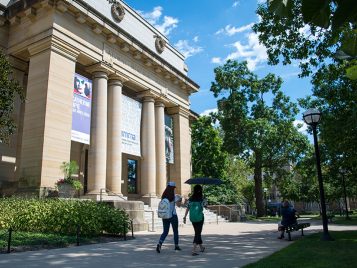


Will Pestle, director of education at LSA’s Kelsey Museum of Archaeology, was stunned by a sudden flood of interest in the museum’s expertise. The phones were ringing off the hook, and Kelsey staff emails were filling up with enthusiastic questions from schoolchildren and their teachers about archaeology. Questions like: What kind of tools do you use at an excavation? What kind of truck works best at a dig? What do archaeologists do when they get sleepy on site? Can you mentor my team of 5th graders?
FIRST LEGO League, an international STEM program for school-aged kids that specializes in robotics, had chosen archaeology as its yearlong theme for 2025–2026. Teams were reaching out to local archaeologists and museums like the Kelsey all over the country. And teachers and students were eager to learn from the real archeologists at the Kelsey. “This totally caught us by surprise, and we scrambled to put together a somewhat organized response,” Pestle says, still a little breathless.
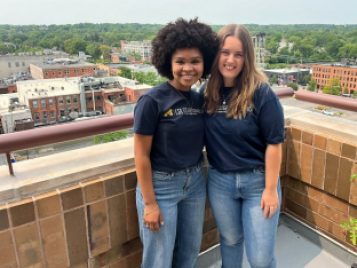
One of FIRST LEGO’s objectives, with the year of archaeology and everything else it takes on, is to design solutions to problems. And the Kelsey understood the assignment. Pestle jumped into action, along with his colleagues: Emily Allison-Siep, the Kelsey’s communications editor; Stephanie Wottreng Haley, community and youth educator; Chris Motz, manager of digital assets; Jennifer Kirker, associate director; and countless other Kelsey-affiliated faculty, staff, and students. Motz personally advised 22 teams, logging hundreds of hours working with teachers, coaches, and students on Zoom, and even participated in an “Ask an Archaeologist” webinar with the Archaeological Institute of America, which reached thousands of viewers.

The many ways that Kelsey faculty and staff assisted students is representative of how the museum and the larger College of LSA foster connections with the Ann Arbor community, the state, and beyond.
Over the course of a single day, Allison-Siep and Motz created a website with educational resources tailored to LEGO challenge team objectives. They focused on interactions among technology, archaeology, and magnetometry, and provided an online form for teams to set up tours at the museum and for students to meet with scientists. While the LEGOs were flying in classrooms all over the globe, the Kelsey team answered call after call.
Kirker provided mentorship to a California team with a personal connection—the team just happened to be from the middle school she attended as a child, so she couldn’t very well say no to the request.
Wottreng Haley fielded the deluge of requests from robotics groups and arranged programming and resources to meet their needs. Wottreng Haley also oversaw the coordination of a wildly successful Family Day.

Oh yes, Family Day. Twice a year, in October and March, the Kelsey Museum of Archaeology invites the local community to participate in Family Day. While the event typically attracts around 300 community members, the 2025 Family Day, themed on LEGO robotics, brought in over 1,000 kids and families.
“Family Day was the most jaw-dropping moment of the entire year,” Pestle says. “We had balloon animals, tours, storytimes—and in three hours, we had over 1,100 people in the building.”
“I felt a little like the Grinch, with my heart growing bigger, to see so many kids excited about archaeology,” Kirker says of the delightfully chaotic atmosphere on Family Day.
During the yearlong collaboration with the FIRST LEGO League, “we relished the opportunity of reaching audiences we don’t always reach, working with students from all over, not just southeast Michigan,” Kirker says. “At the Kelsey, we are situated in the humanities, and it was rewarding to show kids we also draw from hard sciences, engineering, and social sciences, and that archaeology is a career where you can apply so many disciplines.”

The Kelsey team stayed in touch with the FIRST LEGO teams, and still marvel at the solutions to archaeological problems that they came up with during competitions. One group built a robot for sealing up especially fragile artifacts in an airtight container to protect them when they come out of the ground. Another group suggested giving artifacts barcodes for data management.
A fanciful solution for archaeologists too tired to drive back to sleeping quarters after a dig came from an elementary school group: a machine built from LEGO bricks that an archaeologist can sleep in. Kirker’s team made it to the California state competition, and one of Pestle’s teams made it to the world championship in Houston.
“Two years ago we put together a plan to establish ourselves in the community outside of the university,” Pestle says. “The STEM audience is not the first one we thought to connect with, but we are so interdisciplinary that it makes sense. I use chemistry to study human bones, and we are developing a primary school fine arts unit focused on ostrich eggshell jewelry. We are also creating a high school science curriculum on ancient human responses to climate change in the state of Michigan. This is a good reminder that we can use archaeology to talk about just about anything.”
Stay informed about current and future Kelsey Museum community programs here.
Photos courtesy of the Kelsey Museum of Archaeology


Look to Michigan for the foundational knowledge and experience to ignite purposeful change.
LSA is the place where creative thinkers engage with a complex, diverse, and changing world. See how your support can make an impact on what’s next, for a better tomorrow. Learn more.
