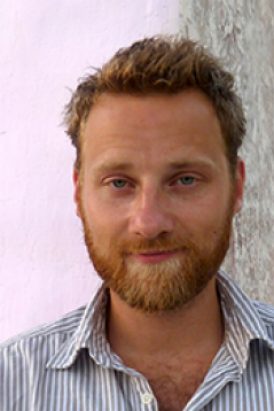
Associate Professor, Anthropology; Curator of African Archaeology, Museum of Anthropological Archaeology
He/Him/His
About
Brian Stewart’s research focuses on the archaeology of prehistoric hunter-gatherers in Africa, especially southern Africa. He is particularly interested in the evolution of the profound adaptive flexibility that is the hallmark of our species. Southern Africa is an great place to explore this because it has yielded some of the world’s earliest evidence for behavioral complexity on par with recent and extant human foragers. His core project, Adaptations to Marginal Environments in the Middle Stone Age (Project AMEMSA), investigates and compares human adaptive responses to three challenging landscapes in southern Africa: the Lesotho Highlands, the interior Karoo desert and the Namaqualand coastal desert. In each research area, he is conducting rockshelter excavations and open-air landscape archaeological and geomorphological surveys. The aim is to resolve when, why, and how humans learned to cope with challenging environments over the past ~300,000 years. By reconstructing the foraging strategies involved in learning to exploit such habitats within Africa, he hopes to better understand how our species was eventually able to colonize and rapidly adapt to the full range of global ecosystems.
He is also interested in the much more recent archaeology of southern Africa, where he invesitgates questions of hunter-gatherer and herder sociality, spirituality and interactions using excavated, ethnographic and rock art records. Beyond Africa, he is involved in research projects in East Asia and the Mediterranean.
Before coming to Michigan, he was a College Fellow in the Department of Anthropology, Harvard University (2012-2013), and a Postdoctoral Research Fellow at the McDonald Institute for Archaeological Research, University of Cambridge (2008-2012). At Cambridge, he was also a Fellow and Director of Studies of Archaeology & Anthropology at Homerton College. He obtained his PhD (D.Phil.) from the University of Oxford in 2008. Over the course of the doctorate he spent three years conducting analyses at the Spatial Archaeology Research Unit (SARU) of the Department of Archaeology, University of Cape Town, South Africa.
Research Areas(s)
- Paleolithic social and spatial organization
- Middle and Later Stone Age Africa
- Evolution of adaptive flexibility
- Mountains and deserts
- Hunter-gatherer ritual and religion
- Lithic, ceramic and shell technologies
- Southern African foragers
Affiliation(s)
- Department of Anthropology
- Museum of Anthropological Archaeology
- African Studies Center
African Archaeology Lab