
Director, Center for Armenian Studies; Professor, History
babayan@umich.eduOffice Information:
Weiser Hall
500 Church Street, Suite 500
phone: 734.763.1597
CMENAS Faculty; CAS Faculty; Center for Armenian Studies; GISC Faculty; Center for Middle Eastern & North African Studies; Global Islamic Studies Center; CAS staff; CAS Executive Committee; CAS Steering Committee; II Center & Program Directors
Education/Degree:
PhD Princeton University, 1993Babayan’s research on majmu’a (anthology) is part of a larger collaboration with fellow Safavid historian Nozhat Ahmadi, at the University of Isfahan. Together they have begun to collect and generate tables of contents for numerous majmu’a that are housed in Tehran’s most prominent public libraries of Majlis, Malik, Milli and Tehran University. Indexing the various genres of texts that comprise each majmu’a, they consider the content and organization of these family archives, and plan to create a digital platform for their Isfahan Anthology Project, where scholars across the world may have access freely to these Persianate-world sources.
The Isfahan Anthology Project stems from Babayan’s 2021 book (for which she was awarded the 2022 Honorable Mention, Fatma Mernissi Book Award, Middle Eastern Studies Association) entitled, The City as Anthology: Urbanity and Eroticism in Early Modern Isfahan (SUP, 2021). The City as Anthology offers a model to study early modern urban culture through anthologies collected in Isfahan’s households. It combines historiographies of the book with scholarship on urban space to intervene in contemporary discussions about experience and materiality from the vantage point of gender and sexuality.
Babayan is the author of another award-winning book, Mystics, Monarchs and Messiahs: Cultural Landscapes of Early Modern Iran (Cambridge M.A.: Harvard University Press, 2003). She has also co-authored Slaves of the Shah: New Elites of Safavi Iran, with Sussan Babaie, Ina Baghdiantz-McCabe, and Massumeh Farhad (London: I.B. Tauris, 2004), and co-edited two books Islamicate Sexualities: Translations Across Temporal Geographies of Desire with Afsaneh Najmabadi (Cambridge M.A.: Harvard University Press, 2008), and An Armenian Mediterranean: Words and Worlds in Motion with Michael Pifer (Cham, Switzerland: Palgarve Macmillan, 2018).
Affiliation(s)
- Middle East Studies
- Armenian Studies
- Comparative Literature
Fields of Study
- Early Modern Iran
- Gender & Sexuality
- Shi’ism
- Sufism
- Manuscript Studies
Awards
- 2024-25 National Endowment for the Humanities (NEH/Mellon) Fellowship
- 2022-23 Fellow, Eisenberg Institute for Historical Studies, University of Michigan
- 2022 Honorable Mention, Fatma Mernissi Book Award, Middle Eastern Studies Association for my book, The City as Anthology
- 2022 LSA Research funding in the Humanities for Isfahan Anthology Project
- 2022 LSA Humanities Collaborative 5 x 5 Incubator Grant for Digital Family Archives
- 2018 Richard Hudson Research Professorship Award, Department of History, University of Michigan

Highlighted Work and Publications
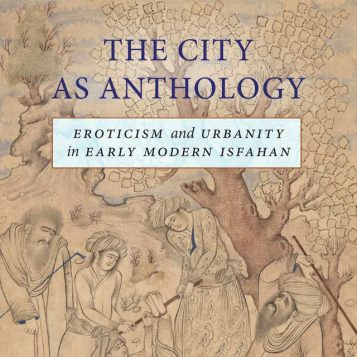
The City as Anthology Eroticism and Urbanity in Early Modern Isfahan
Kathryn Babayan
(2022: MESA Book Awards: Honorable Mention for the 2022 Fatema Mernissi Book Award, sponsored by the Middle East Studies Association)
Household anthologies of seventeenth-century Isfahan collected everyday texts and objects, from portraits, letters, and poems to marriage contracts and talismans. With these family collections, Kathryn Babayan tells a new history of the city at the transformative moment it became a cosmopolitan center of imperial rule. Bringing into view people's lives from a city with no extant state or civic archives, Babayan reimagines the archive of anthologies to ...
See More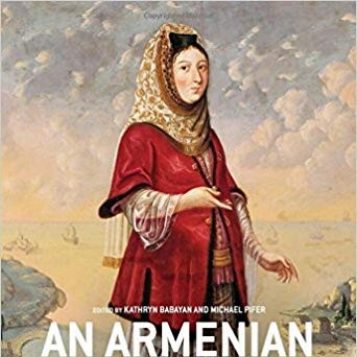
An Armenian Mediterranean Words and Worlds in Motion (2018)
Editors: Kathryn Babayan, Michael Pifer
This book rethinks the Armenian people as significant actors in the context of Mediterranean and global history. Spanning a millennium of cross-cultural interaction and exchange across the Mediterranean world, essays move between connected histories, frontier studies, comparative literature, and discussions of trauma, memory, diaspora, and visual culture. Contributors dismantle narrow, national ways of understanding Armenian literature; propose new frameworks for mapping the post-Ottoman Mediterranean world; and navigate the challenges of writing national history in a globalized age. A century...
See More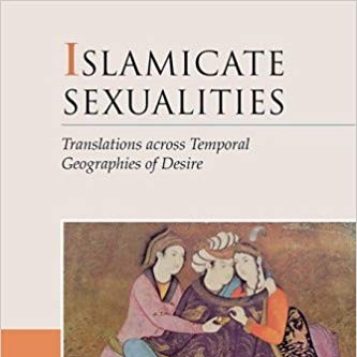
Islamicate Sexualities Translations across Temporal Geographies of Desire (2008)
Edited by Kathryn Babayan and Afsaneh Najmabadi
Islamicate Sexualities: Translations across Temporal Geographies of Desire explores different genealogies of sexuality and questions some of the theoretical emphases and epistemic assumptions affecting current histories of sexuality. Concerned with the dynamic interplay between cultural constructions of gender and sexuality, the anthology moves across disciplinary fields, integrating literary criticism with social and cultural history, and establishes a dialogue between historians (Kathryn Babayan, Frédéric Lagrange, Afsaneh Najmabadi, and Everett Rowson), comparative literary...
See More
Slaves of the Shah: New Elites of Safavid Iran (2004)
Sussan Babaie, Kathryn Babayan, Ina Baghdiantz-McCabe, Massumeh Farhad
The Safavid dynasty represented the pinnacle of Iran's power and influence in its early modern history. The evidence of this - the creation of a nation state, military expansion and success, economic dynamism and the exquisite art and architecture of the period is well-known. What is less understood is the extent to which the Safavid success depended on an elite originating from outside Iran: the slaves of Caucasian descent and the Armenian merchants of Isfahan. This book describes how these elites, following their conversion to Islam, helped to transform Isfahan's urban, artistic and social...
See More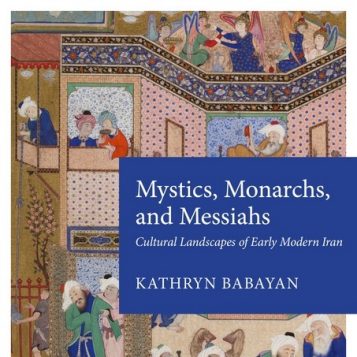
Mystics, Monarchs, and Messiahs Cultural Landscapes of Early Modern Iran (2003)
Kathryn Babayan
Focusing on idealists and visionaries who believed that Justice could reign in our world, this book explores the desire to experience utopia on earth. Reluctant to await another existence—another form, or eternal life following death and resurrection—individuals with ghuluww, or exaggeration, emerged at the advent of Islam, expecting to attain the apocalyptic horizon of Truth. In their minds, Muhammad’s prophecy represented one such cosmic moment of transformation. Even in the early modern period, some denizens of Islamdom continued to hope for a utopia despite aborted promises and expectations...
See More