Doctoral Candidate
About
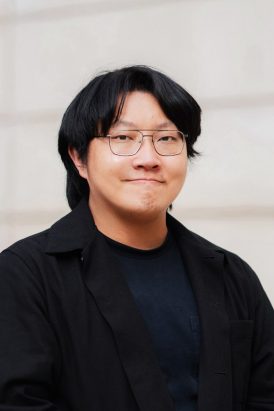
Tyler is a Ph.D. candidate in Political Science and Scientific Computing at the University of Michigan, with a concurrent M.A. in Statistics. He studies the elite origins and the societal foundations of political parties and party systems: how much power party elites wield when they build campaign platforms united, how much damage they inflict on the vehicles they built when factional interests pull them apart, and how the geographical distribution of racial and ethnic groups and the rise and fall of age cohorts drive the birth, death, and fragmentation of parties. Because answering these questions requires recovering how groups actually vote from aggregate election results and censuses, he also builds the ecological-inference tools to do so, including BACH, a simulation-based framework for estimating subgroup voting behavior where surveys are biased or missing.
His dissertation and book project, "The Tower of Babel We Bury: Geography, Group-Making, and the Communal Foundations of Party Systems," asks when the mismatch between a party's demographic umbrella and the group's internal heterogeneity grows too large for the platform to hold, and what happens to the party system when the buried difference reasserts itself. He develops the argument across the United States, Malaysia, Taiwan, and Japan, with multi-sited fieldwork running from the Malay neighborhoods of Kuala Lumpur and the coastal villages of Terengganu to the Detroit suburbs and New York City's three Chinatowns, reading his cases in Chinese, Malay, and Indonesian. His research appears in the Journal of East Asian Studies and in the two leading Chinese-language journals of Southeast Asian studies; three further papers are under review. His work has been supported by research grants from UMich's International Institute, Institute for Social Research, and the Department of Political Science.