

Click the image to the left or go here for a full listing of events at CCPS and its affiliated centers, the Weiser Center for Europe and Eurasia (WCEE) and the Center for Russian, East European, and Eurasian Studies (CREES).
CCPS Lecture. The Trauma of Serfdom: The Psychological Legacy of Unfree Labor in Poland
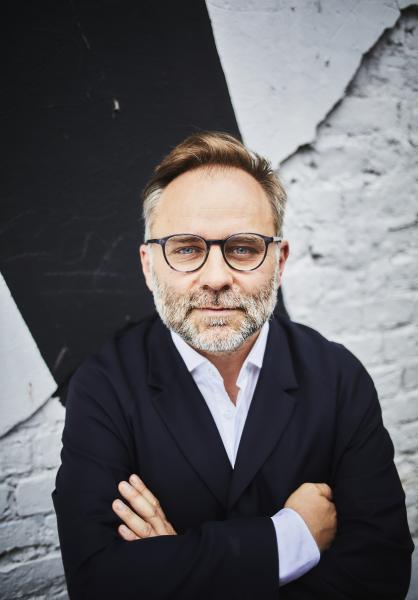
Kacper Pobłocki, social anthropologist, writer, and associate professor at the University of Warsaw
Coerced labor was a defining feature of the early modern world. While Atlantic slavery has received most scholarly attention, Eastern European serfdom remains comparatively understudied. Twentieth-century historiography portrayed it as relatively meek system. In his book
Chamstwo, Kacper Pobłocki challenges this view by exposing the profound brutality of serfdom. As Adam Bućkiewicz observed in 1830, Polish serfs “lived as if enveloped in a foggy, heavy, and putrid atmosphere.” Pobłocki argues that peasant culture emerged as a creative response to systemic class violence—for instance, the ritual cultivation of matted hair, the Polish plait, functioned as a form of vernacular therapy.
Around 19 percent of Poles today suffer from post-traumatic stress disorder—a rate exceeding the global average of 5 to 10 percent. This is typically attributed to World War II, yet Pobłocki’s research suggests that its roots reach deeper. In the sequel to Chamstwo, he examines how the first generation of peasants freed from serfdom coped with the psychological burden of their parents’ subjugation, revealing how they developed strategies to free themselves from its legacy. Remarkably, these strategies—devised by largely illiterate peasants at the turn of the nineteenth and twentieth centuries—anticipate contemporary psychological insights into trauma recovery.
Kacper Pobłocki is a social anthropologist, writer, and associate professor at the University of Warsaw. He is a graduate of the Central European University and a former fellow at the Center for Place, Culture and Politics at CUNY (directed by David Harvey). He has published academic articles in journals such as the International Journal of Urban and Regional Research and has authored two books in Polish: Spatial Origins of Capitalism (2017), which received the “Economicus” Award for the best Polish economics book of the year, and Chamstwo (2021), which was a finalist for the “Nike” —Poland’s most prestigious literary award. His current work intersects historical anthropology and psychology and deals with the experience of serfdom and its social, political and psychological aftermath.
If there is anything we can do to make this event accessible to you, please contact us at gosiak@umich.edu. Please be aware that advance notice is necessary as some accommodations may require more time for the university to arrange.
Around 19 percent of Poles today suffer from post-traumatic stress disorder—a rate exceeding the global average of 5 to 10 percent. This is typically attributed to World War II, yet Pobłocki’s research suggests that its roots reach deeper. In the sequel to Chamstwo, he examines how the first generation of peasants freed from serfdom coped with the psychological burden of their parents’ subjugation, revealing how they developed strategies to free themselves from its legacy. Remarkably, these strategies—devised by largely illiterate peasants at the turn of the nineteenth and twentieth centuries—anticipate contemporary psychological insights into trauma recovery.
Kacper Pobłocki is a social anthropologist, writer, and associate professor at the University of Warsaw. He is a graduate of the Central European University and a former fellow at the Center for Place, Culture and Politics at CUNY (directed by David Harvey). He has published academic articles in journals such as the International Journal of Urban and Regional Research and has authored two books in Polish: Spatial Origins of Capitalism (2017), which received the “Economicus” Award for the best Polish economics book of the year, and Chamstwo (2021), which was a finalist for the “Nike” —Poland’s most prestigious literary award. His current work intersects historical anthropology and psychology and deals with the experience of serfdom and its social, political and psychological aftermath.
If there is anything we can do to make this event accessible to you, please contact us at gosiak@umich.edu. Please be aware that advance notice is necessary as some accommodations may require more time for the university to arrange.
| Building: | Weiser Hall |
|---|---|
| Event Type: | Lecture / Discussion |
| Tags: | eastern europe, europe, poland |
| Source: | Happening @ Michigan from Copernicus Center for Polish Studies, A. Alfred Taubman College of Architecture + Urban Planning, International Institute, Center for Russian, East European, and Eurasian Studies, Weiser Center for Europe and Eurasia |
