
For Thee and All the World to See: May 18 Gwangju and the Visual Tenacities of South Korean Democracy
Juhn Ahn, Thierry Bonzon, Ji Yeon (Jean) Hong, Sohl Lee, Hayana Kim, David Dolinger, Na Kyung-taek
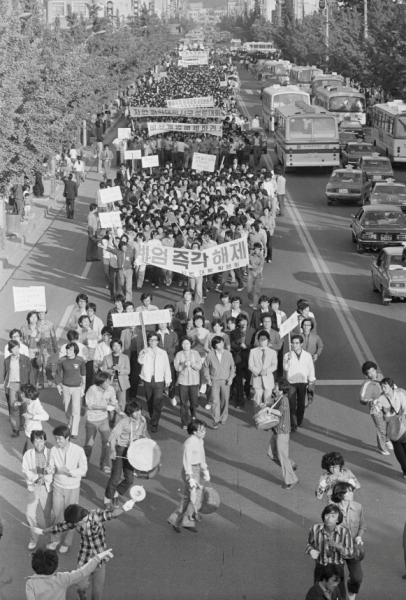
Description:
Presented as part of the University of Michigan’s Democracy Week, this symposium explores the enduring legacy of the May 18, 1980 Gwangju Democratization Movement and the role of visual media in shaping South Korea’s democratic consciousness. Organized in conjunction with an exhibition of 90 curated images from the Gwangju 5·18 Archives on campus, the event bridges historical analysis with living memory. Survivors and eyewitnesses will share their reflections alongside scholars to examine how images and personal testimony break through censorship and serve as vital tools for historical justice—connecting Gwangju’s struggle to global conversations on human rights.
This event is organized by Nam Center for Korean Studies and co-sponsored by the May 18 Archives, Center for Democracy & Civic Empowerment, Department of Political Science, Center for Emerging Democracies, the Donia Human Rights Center, and Asia Library.
Official event poster: https://myumi.ch/G7Ge1
Parking information: https://myumi.ch/WDpNd
Program
1:00 - 1:05 / Opening Remarks
Juhn Ahn / University of Michigan
1:05 - 1:15 / May 18 Gwangju: Brief Historical Overview
Ji Yeon Hong / University of Michigan
1:15 - 2:15 / Witnessing and Documenting Gwangju
David Dolinger / Former Peace Corps Volunteer
“Called by Another Name – Gwangju’s Impact on a Life”
Na Kyung-taek / Former Jeonnam Daily Photojournalist
“A Reporter's Eyewitness Account of the Command to Open Fire”
Q & A
2:30 - 3:10 / O-IL-PAL: South Korean Democracy as Performance and Event
Hayana Kim / Ohio State University
"The Gwangju Uprising and the Performativity of South Korean Democracy"
Sohl Lee / Stony Brook University
"The Photographs of Gwangju in 1980: Uneven Disseminations and Reactivated Events"
3:10 - 3:25 / Gwangju in the World
Thierry Bonzon / Université Gustave Eiffel
3:25 - 4:00 / Q & A
Speakers:
Juhn Ahn / University of Michigan
Director of the Nam Center for Korean Studies and associate professor of Buddhist and Korean studies, Juhn Y. Ahn earned his B.A. in Asian studies and religion from the University of Michigan, Ann Arbor, and his Ph.D. in Buddhist Studies from UC Berkeley. He taught East Asian religions at the University of Toronto from 2006 to 2011. After a year researching religion and Koryŏ history at the Institute for Advanced Study in Princeton, NJ, he joined U-M's Department of Asian Languages and Cultures in 2011. His research covers East Asian religions, Buddhism, Chan and Zen, traditional medicine, and premodern Korean cultural and economic histories. He has published widely on Japanese Zen, Zen master Hakuin Ekaku, traditional medicine in Japan, Korean Buddhism and Sŏn monasticism, and Korean film. Major publications include Buddhas and Ancestors: Religion and Wealth in Fourteenth-Century Korea (2018), Transgression in Korea (2018), and translations like The Orthodox Path of Seon (2023) and Gongan Collections I (2012). He is currently co-editing a volume on Koryŏ and contributing to the Cambridge Histories Series, and is the recipient of awards including the Puri Award, Andrew W. Mellon Fellowship, and Kyujanggak Fellowship.
Ji Yeon Hong / University of Michigan
Ji Yeon Hong is an associate professor of political science and the Korea Foundation Chair Professor of Korean Politics at the University of Michigan. Her research focuses on authoritarian politics, democratization, political violence, and elite behavior under dictatorship in East Asia. Her scholarship has been widely published in leading field publications, including the American Journal of Political Science, British Journal of Political Science, and Journal of Politics.
Her academic path is deeply rooted in the historic political movements she witnessed firsthand. Raised in Seoul, South Korea, her experience observing the country's democratization during the 1980s and 1990s inspired her to pursue political science. After earning her Bachelor’s and Master’s degrees from Seoul National University and her Ph.D. from New York University, she served on the faculty at the Hong Kong University of Science and Technology (HKUST) from 2014 to 2022, where she observed another defining wave of pro-democracy activism before joining U-M.
David Dolinger / Former Peace Corps Volunteer
David L. Dolinger is a scientist and global health professional currently working in India. He has played key roles in the development and commercialization of diagnostic solutions with a focus on their practical implementation and use in low- and middle-income countries. His work sits at the intersection of laboratory science, regulatory rigor, and a long-standing commitment to social justice and patient-centered care. Over the years he has also taken on advisory and collaborative roles with diagnostic manufacturers and global health partners focused on expanding access to high-quality testing in low- and middle-income countries.
However, this passion and drive would not have fermented to the level if it had not been for his life-forming experiences as a Peace corps volunteer in the Republic of Korea. At the young age of 22, he travelled for the first time outside of the United States, landing in south Jeolla province in the small county of Yeongam. He worked in the local health center focusing on tuberculosis control. It was there that he started to understand how diagnostic tests are the foundation of good health care. It was his experiences in and participation in the May 18 Democratization Movement, in Gwangju that grounded him and has driven him through his life to utilize his talents and understanding of diagnostics to focus on those that are marginalized and ignored.
Na Kyung-taek / Former Photojournalist
Na Kyung-taek, former head of the Yonhap News Bureau for Gwangju and Jeonnam, began his career in journalism in 1967. As a pioneering photojournalist, he captured the frontlines of the May 18 Democratization Movement, exposing the truth to the world through his lens. His unwavering journalistic integrity earned him both the Courageous Journalist Award and the Korea Journalist Award.
Following his retirement, Mr. Na continued to serve the public through university lectures and welfare foundation work. He has remained dedicated to sharing the historical significance of May 18 globally, authoring books such as When That Day in May Comes Again and We Saw, and hosting photo exhibitions across South Korea and internationally, including in Germany and the United States.
Sohl Lee / Stony Brook University
Sohl Lee is associate professor of art history at Stony Brook University (SUNY), specializing in modern and contemporary Asian art, decolonial visual culture, socially engaged art, and ecological art history, with a particular interest in oceanic and transpacific frameworks. Her first book, The Minjung Art Movement: Decolonization and Democracy in South Korea (Duke University Press, 2026), historicizes an influential movement of activist art from the 1970s and 1980s. Her current book project, Seaweed as Method: Art History with Oceans, Multispecies Life, and Empire examines the global visual cultures of seaweeds through the intertwined lenses of ecology, decolonization, food sovereignty, and Indigenous onto-epistemologies. She is a recipient of the SUNY Chancellor’s Award for Excellence in Teaching (2020) and has received grants and fellowships from the Social Sciences Research Council (SSRC), the Korea Foundation, the Korean Ministry of Culture, the Academy of Korean Studies, the Getty Research Institute, and the Andy Warhol Foundation, among others.
Hayana Kim / Ohio State University
Hayana Kim is an assistant professor in the Department of East Asian Languages and Literatures at the Ohio State University. As an interdisciplinary performance and media historian of twentieth- and twenty-first-century South Korea, her research centers on cultures of democracy in contemporary South Korea. Her teaching is at the intersections of Korean studies, Asian diasporic studies, and theatre, performance, and media studies. Kim is currently working on her book manuscript entitled Making P’an for a New World: The Kwangju Uprising, Women, and the Performativity of South Korean Democracy. This project, based on extensive archival and ethnographic research, investigates the role of the body and affect in advancing democracy in South Korea by illuminating various forms of performances that women in Kwangju and in broader Chŏlla Province created to bring out insurgent cultural spaces where deaths disavowed by the state and concealed from the public eye emerge into communal memories. Her work has appeared or is forthcoming in Journal of Asian Studies, Asian Theatre Journal, and in edited collections published by Cambridge University Press, Chonnam National University, among others. She received her Ph.D. from the Interdisciplinary Ph.D. Program in Theatre and Drama at Northwestern University.
Thierry Bonzon / Université Gustave Eiffel
Thierry Bonzon, associate professor (Maître de conférences) in contemporary history at Université Gustave Eiffel, conducts research at the intersection of First World War history and the historical analysis of photography as a primary source. His first line of inquiry examines the local dynamics of wartime sacrifice, social policy, and pacifist movements—notably explored through the "La France pétitionne" project and the co-organization of the international conference Les défenseurs de la paix, 1899–1917, which integrated Peace Studies into French historiography. His second field explores photojournalism and image-based history through two distinct geographical and temporal contexts: a collective project analyzing over 2,000 photographer-correspondents for l'Humanité documenting social and urban changes in the Paris region (1950s–1990s), and a current investigation into the photographic archives of the May 1980 Gwangju Uprising in South Korea. Together, these projects bridge archival discovery, public history, and the study of visual media as a fundamental tool for constructing historical memory.
If there is anything we can do to make this event accessible to you, please contact us. Please be aware that advance notice is necessary as some accommodations may require more time for the university to arrange.
Presented as part of the University of Michigan’s Democracy Week, this symposium explores the enduring legacy of the May 18, 1980 Gwangju Democratization Movement and the role of visual media in shaping South Korea’s democratic consciousness. Organized in conjunction with an exhibition of 90 curated images from the Gwangju 5·18 Archives on campus, the event bridges historical analysis with living memory. Survivors and eyewitnesses will share their reflections alongside scholars to examine how images and personal testimony break through censorship and serve as vital tools for historical justice—connecting Gwangju’s struggle to global conversations on human rights.
This event is organized by Nam Center for Korean Studies and co-sponsored by the May 18 Archives, Center for Democracy & Civic Empowerment, Department of Political Science, Center for Emerging Democracies, the Donia Human Rights Center, and Asia Library.
Official event poster: https://myumi.ch/G7Ge1
Parking information: https://myumi.ch/WDpNd
Program
1:00 - 1:05 / Opening Remarks
Juhn Ahn / University of Michigan
1:05 - 1:15 / May 18 Gwangju: Brief Historical Overview
Ji Yeon Hong / University of Michigan
1:15 - 2:15 / Witnessing and Documenting Gwangju
David Dolinger / Former Peace Corps Volunteer
“Called by Another Name – Gwangju’s Impact on a Life”
Na Kyung-taek / Former Jeonnam Daily Photojournalist
“A Reporter's Eyewitness Account of the Command to Open Fire”
Q & A
2:30 - 3:10 / O-IL-PAL: South Korean Democracy as Performance and Event
Hayana Kim / Ohio State University
"The Gwangju Uprising and the Performativity of South Korean Democracy"
Sohl Lee / Stony Brook University
"The Photographs of Gwangju in 1980: Uneven Disseminations and Reactivated Events"
3:10 - 3:25 / Gwangju in the World
Thierry Bonzon / Université Gustave Eiffel
3:25 - 4:00 / Q & A
Speakers:
Juhn Ahn / University of Michigan
Director of the Nam Center for Korean Studies and associate professor of Buddhist and Korean studies, Juhn Y. Ahn earned his B.A. in Asian studies and religion from the University of Michigan, Ann Arbor, and his Ph.D. in Buddhist Studies from UC Berkeley. He taught East Asian religions at the University of Toronto from 2006 to 2011. After a year researching religion and Koryŏ history at the Institute for Advanced Study in Princeton, NJ, he joined U-M's Department of Asian Languages and Cultures in 2011. His research covers East Asian religions, Buddhism, Chan and Zen, traditional medicine, and premodern Korean cultural and economic histories. He has published widely on Japanese Zen, Zen master Hakuin Ekaku, traditional medicine in Japan, Korean Buddhism and Sŏn monasticism, and Korean film. Major publications include Buddhas and Ancestors: Religion and Wealth in Fourteenth-Century Korea (2018), Transgression in Korea (2018), and translations like The Orthodox Path of Seon (2023) and Gongan Collections I (2012). He is currently co-editing a volume on Koryŏ and contributing to the Cambridge Histories Series, and is the recipient of awards including the Puri Award, Andrew W. Mellon Fellowship, and Kyujanggak Fellowship.
Ji Yeon Hong / University of Michigan
Ji Yeon Hong is an associate professor of political science and the Korea Foundation Chair Professor of Korean Politics at the University of Michigan. Her research focuses on authoritarian politics, democratization, political violence, and elite behavior under dictatorship in East Asia. Her scholarship has been widely published in leading field publications, including the American Journal of Political Science, British Journal of Political Science, and Journal of Politics.
Her academic path is deeply rooted in the historic political movements she witnessed firsthand. Raised in Seoul, South Korea, her experience observing the country's democratization during the 1980s and 1990s inspired her to pursue political science. After earning her Bachelor’s and Master’s degrees from Seoul National University and her Ph.D. from New York University, she served on the faculty at the Hong Kong University of Science and Technology (HKUST) from 2014 to 2022, where she observed another defining wave of pro-democracy activism before joining U-M.
David Dolinger / Former Peace Corps Volunteer
David L. Dolinger is a scientist and global health professional currently working in India. He has played key roles in the development and commercialization of diagnostic solutions with a focus on their practical implementation and use in low- and middle-income countries. His work sits at the intersection of laboratory science, regulatory rigor, and a long-standing commitment to social justice and patient-centered care. Over the years he has also taken on advisory and collaborative roles with diagnostic manufacturers and global health partners focused on expanding access to high-quality testing in low- and middle-income countries.
However, this passion and drive would not have fermented to the level if it had not been for his life-forming experiences as a Peace corps volunteer in the Republic of Korea. At the young age of 22, he travelled for the first time outside of the United States, landing in south Jeolla province in the small county of Yeongam. He worked in the local health center focusing on tuberculosis control. It was there that he started to understand how diagnostic tests are the foundation of good health care. It was his experiences in and participation in the May 18 Democratization Movement, in Gwangju that grounded him and has driven him through his life to utilize his talents and understanding of diagnostics to focus on those that are marginalized and ignored.
Na Kyung-taek / Former Photojournalist
Na Kyung-taek, former head of the Yonhap News Bureau for Gwangju and Jeonnam, began his career in journalism in 1967. As a pioneering photojournalist, he captured the frontlines of the May 18 Democratization Movement, exposing the truth to the world through his lens. His unwavering journalistic integrity earned him both the Courageous Journalist Award and the Korea Journalist Award.
Following his retirement, Mr. Na continued to serve the public through university lectures and welfare foundation work. He has remained dedicated to sharing the historical significance of May 18 globally, authoring books such as When That Day in May Comes Again and We Saw, and hosting photo exhibitions across South Korea and internationally, including in Germany and the United States.
Sohl Lee / Stony Brook University
Sohl Lee is associate professor of art history at Stony Brook University (SUNY), specializing in modern and contemporary Asian art, decolonial visual culture, socially engaged art, and ecological art history, with a particular interest in oceanic and transpacific frameworks. Her first book, The Minjung Art Movement: Decolonization and Democracy in South Korea (Duke University Press, 2026), historicizes an influential movement of activist art from the 1970s and 1980s. Her current book project, Seaweed as Method: Art History with Oceans, Multispecies Life, and Empire examines the global visual cultures of seaweeds through the intertwined lenses of ecology, decolonization, food sovereignty, and Indigenous onto-epistemologies. She is a recipient of the SUNY Chancellor’s Award for Excellence in Teaching (2020) and has received grants and fellowships from the Social Sciences Research Council (SSRC), the Korea Foundation, the Korean Ministry of Culture, the Academy of Korean Studies, the Getty Research Institute, and the Andy Warhol Foundation, among others.
Hayana Kim / Ohio State University
Hayana Kim is an assistant professor in the Department of East Asian Languages and Literatures at the Ohio State University. As an interdisciplinary performance and media historian of twentieth- and twenty-first-century South Korea, her research centers on cultures of democracy in contemporary South Korea. Her teaching is at the intersections of Korean studies, Asian diasporic studies, and theatre, performance, and media studies. Kim is currently working on her book manuscript entitled Making P’an for a New World: The Kwangju Uprising, Women, and the Performativity of South Korean Democracy. This project, based on extensive archival and ethnographic research, investigates the role of the body and affect in advancing democracy in South Korea by illuminating various forms of performances that women in Kwangju and in broader Chŏlla Province created to bring out insurgent cultural spaces where deaths disavowed by the state and concealed from the public eye emerge into communal memories. Her work has appeared or is forthcoming in Journal of Asian Studies, Asian Theatre Journal, and in edited collections published by Cambridge University Press, Chonnam National University, among others. She received her Ph.D. from the Interdisciplinary Ph.D. Program in Theatre and Drama at Northwestern University.
Thierry Bonzon / Université Gustave Eiffel
Thierry Bonzon, associate professor (Maître de conférences) in contemporary history at Université Gustave Eiffel, conducts research at the intersection of First World War history and the historical analysis of photography as a primary source. His first line of inquiry examines the local dynamics of wartime sacrifice, social policy, and pacifist movements—notably explored through the "La France pétitionne" project and the co-organization of the international conference Les défenseurs de la paix, 1899–1917, which integrated Peace Studies into French historiography. His second field explores photojournalism and image-based history through two distinct geographical and temporal contexts: a collective project analyzing over 2,000 photographer-correspondents for l'Humanité documenting social and urban changes in the Paris region (1950s–1990s), and a current investigation into the photographic archives of the May 1980 Gwangju Uprising in South Korea. Together, these projects bridge archival discovery, public history, and the study of visual media as a fundamental tool for constructing historical memory.
If there is anything we can do to make this event accessible to you, please contact us. Please be aware that advance notice is necessary as some accommodations may require more time for the university to arrange.
| Building: | Hatcher Graduate Library |
|---|---|
| Event Type: | Conference / Symposium |
| Tags: | Activism, Art, Asian Languages And Cultures, Democracy, International, Korea, Korean Studies, Politics |
| Source: | Happening @ Michigan from Nam Center for Korean Studies, University Library, International Institute, Center for Emerging Democracies, Donia Human Rights Center, Asian Languages and Cultures, Department of Political Science, Democracy & Civic Empowerment |
