
- All News
-
- Search News
-
- Social Transformation, a Passionate Community of Scholars
- The Michigan Difference Student Leadership Awards
- Dignity and Well-being in the Workplace: A French Perspective
- Leadership Lens with Becky Woolf
- Leadership Lens with Olivia O'Connell
- Break Away Podcast
- BLI Weekend in Detroit
- Leadership Philosophy Reflection
- Teaching Leadership, a Senior Reflection
- BLI – Year One
- Senior Reflection, Renuka Murthi
- An Unforgettable Homecoming Weekend
- A Weekend of Inspiration: Football, Fellowship, and Learning from Leaders
- Mindful Leader Retreat: A truly the perfect vacation away from school
- Making the Most of Your Time at Michigan and Beyond
- BLI Announces New Mascot, Bargie Beaver
- BLI in Detroit
- BLI Goes to Washington D.C.
- Podcasting with the BLI
- Social Transformation 2023-24 Recap
- Project RISHI - Tirunelveli Education Project
- Team Pressure Washing Robot
- Neonatal Asphyxia Project
- Taking Student Leadership to New Heights with BLI Grants
- Mindfulness, Dignity, and the Art of Human Connection
- BLI Speaker Event with author Ira Chaleff
- Homecoming Fun with BLI Alums
- Mindful Leader Retreat Reflection
- BLI Alumni Panel and Networking Session
- Alumni Engagement, A Student Perspective
- BLI in Japan
- Leadership Extravaganza
- Exploring Wellness and Resilience in Detroit
- The Michigan Difference Student Leadership Awards
- Podcasting with the BLI
- BLI Alumni Panel and Networking Session
- Social Transformation, a Passionate Community of Scholars
- Carrying Stories, Cultivating Peace: A Student’s Reflection on Hiroshima
- Storytelling, Empathy, and Leadership at BLI Homecoming
- Lessons from Hiroshima: Cultivating Mindful Peace Leadership
- Empowering Student Impact: A Reflection on the BLI Grants Year
- I Had No Prior Experience, and I Was Scared
- Legacies | What It Really Means to Graduate from BLI
- Every Alum is Welcome! A Recap of BLI Alumni Weekend 2026.
- Archived News
- All Events
May 8, 2026 — This week marks my biggest milestone to date, and I’m not referring to graduation (though that did happen)
In 2022 I made a promise to myself: go as unimaginably far outside your comfort zone as you possibly can.
The reality of committing to ambitious dreams is that when you ask for growth, you are not given growth. You are given challenges in order to create that growth. To recall the words of the alchemist in Paulo Coelho's book, “Every search begins with beginner's luck. And every search ends with the victor's being severely tested.”
Committing to four years at the University of Michigan was the first decisive step to travel beyond my comfort zone. Within weeks of arriving in Ann Arbor, I lost more sleep than I’d like to admit over one question: How do I buy time to delay picking a major? It’s important to read between the lines here. The real challenge I faced was not picking a major. It was owning up to what picking a major meant. Here stood an 18-year-old with the flame of passion lit in her soul, the clarity that comes from nearly burning that flame out multiple times, and a silent knowing that there exists a purpose to channel that passion into. And yet the very state of not knowing what the path or purpose looks like made it extremely difficult to trust in the path, and therefore difficult to choose a path.
I discovered I could avoid making a decision by creating a decision-making system. From this emerged the “life skills” approach to selecting classes. Each semester, I would take one course that offered long-term skills applicable to life, a catch-all for any path I could choose.
With leadership as the first skill, I enrolled in Foundations of Effective Leadership and Followership. My honest review? This class is a force multiplier. Looking back, it’s only natural that I continued to teach that class over the next three years.
The second challenge came in my first year teaching. What does it look like to develop leaders while still becoming one yourself? Credibility, competency, confidence, and “Why would anyone listen to a sophomore coaching leadership?” were all valid to question here.
My response? Figure it out, and keep it simple. In trying to map a “figure it out as you go” framework, I gave myself a deadline of graduation and set an intention: develop leaders who develop leaders. I assumed the first signs of that legacy would appear in my alum years because legacy is the impact you leave behind.
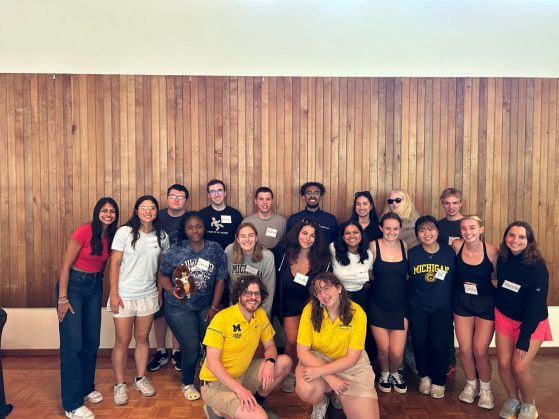
And yet this year I developed new leaders alongside the very students I once taught. Facilitating classes. Hosting a podcast episode. Attending annual alumni panels. All planned and executed by former students.
Across the 168+ emerging leaders I’ve gotten to know, legacy took on a new meaning. Legacy is not just something you leave behind. Legacy is very much present. It is the through-line of every single decision you make.
“Develop leaders who develop leaders” is what students and colleagues know today as my teaching philosophy. Every time I reach milestones--graduation or seeing my former students become the next lead teaching fellows--I make the time to pause and reflect on where this teaching philosophy all started: as a response to the question I asked myself from day one,
What legacy do you live, lead, and ultimately leave?
We all leave an impact, a ripple effect, on the people and spaces we interact with. This impact exists, seen or unseen, intended or unintended. To take a page out of Marcus Aurelius’s book, given what is up to us and what is not up to us, it is in our control to take responsibility for what is up to us. In this case, the ability to shape impact. Why not maximize the positive ripple effects of my impact? In true economist fashion, I chose a repeatable, scalable intention I could trust to guide me in my early teaching career: develop leaders who develop leaders and so on. It’s a philosophy about leadership just as much as it is about legacy. Not a legacy you leave behind. A living legacy.
That legacy also became a strategy to answer the question of how to develop leaders while still becoming one yourself, which was the path I ultimately ended up taking to travel beyond my comfort zone.
After wrapping up an incredibly rich three years as a lead for the teaching team, I’ve discovered a third challenge: how do you follow a map that reveals itself as you take each step and not a moment before?
So far, the map appears as follows:
- Pick a direction
- Greet challenges with curiosity
- Make a decision and act on it
- Pause. Reflect. Measure + audit your progress
- Repeat
This is the map I wish I had at 18 and am now immensely grateful to use as I begin my post-grad career at American Express this fall. To the reader currently building up the courage to figure it out, the courage, confidence, and clarity come after you take the next step. Keep dreaming big and trust that BLI will guide you in asking the right questions as you figure out what legacy do you want to live, lead, and leave?

Samantha Howden is a senior majoring in Economics with a minor in Quantitative Methods. As a sophomore in Foundations of Leadership, ALA 274, Samantha experienced one profound revelation after another and realized how much learning about leadership at BLI enhanced every other aspect of life. She is most grateful for the BLI travel experiences that have enabled new connections with her fellow Leaders and Best. In addition to expanding her leadership perspective at Ross Sanger Leadership Center and Center for Positive Organizations, Samantha serves as Co-President of Salto Dance Company and a peer mentor for Society of Women in Economics. With experiences across business development, operations, and nonprofit consulting, she is focused on building a career at the intersection of operational strategy, cloud technology, and people development. Samantha continues to help people and ideas thrive through people-first leadership as a third-year LTF and Leadership Certificate member.
