
%20copy.jpg.transform/bigfree/image.jpg)
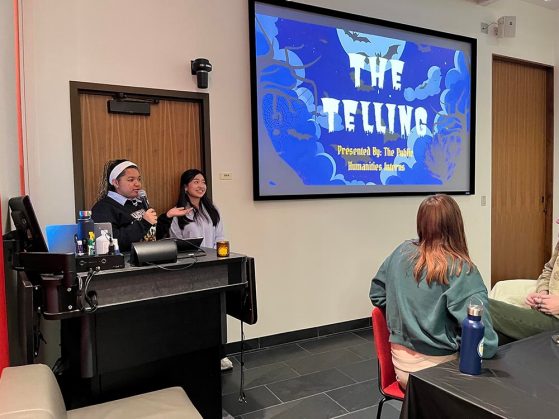
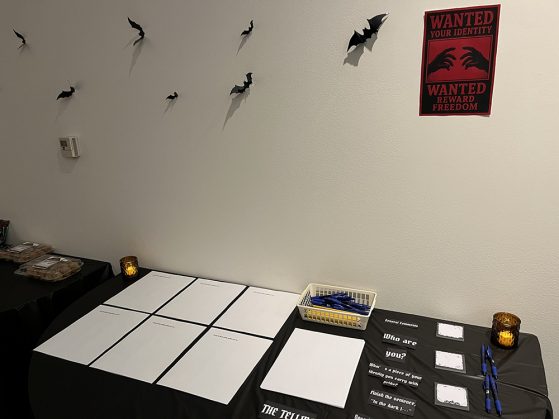
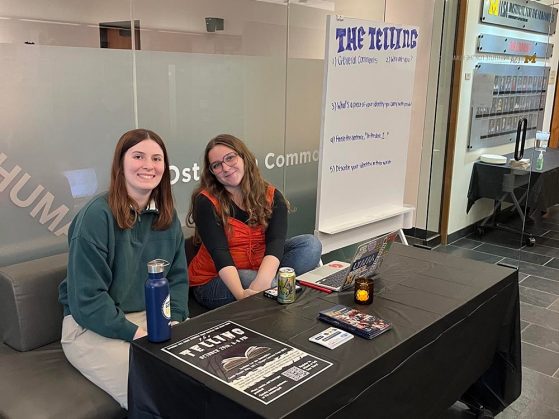
On October 29, the University of Michigan’s Institute for the Humanities hosted ‘The Telling’, an interactive and seasonally-inspired storytelling night that invited students and community members to explore identity, vulnerability, and belonging through creative expression. Set in the Osterman Common Room and organized by Public Humanities interns under the leadership of Serenity Moore and Gianna Limarvin, the event blended a festive, spooky atmosphere with thoughtful opportunities for reflection. Guests were encouraged to arrive in costume or cozy pajamas, adding an element of playfulness that eased participants into the evening’s deeper themes. With snacks, pizza, dim lighting, and themed activities, the space felt warm and welcoming.
The program began with two original “haunting” pieces from volunteers, each delving into distinct and deeply personal themes. LSA senior and Public Humanities Intern Jewell Mason traced her struggle to reconcile her sexuality and her Christian upbringing, inviting listeners to question rigid identity “boxes” and embrace multiplicity. LSA junior Freya Mitchell followed with an evocative poem about outgrowing former selves, using imaginative metaphors to reflect on transformation and memory. These opening performances set a tone of honesty and introspection that encouraged the audience to consider how the stories we tell, and maybe, in particular, the ones we hesitate to tell, reveal who we are.
Following the readings, ‘The Telling’ shifted into collective modes of participation. Attendees stood and raised their hands in response to identity-based prompts, with questions ranging from the lighthearted (“Are you good at math?”) to the personally reflective (“Do you work hard in school?”). These facilitated witness of shared experiences, creating moments of surprise, recognition, and camaraderie. The evening then transitioned into a collaborative “Franken-story” activity, where guests collectively built strange, humorous narratives by adding a few words at a time to a rotating set of prompts. Laughter and conversation filled the room as participants pieced together each other’s ideas, revealing how storytelling can be both deeply personal and wonderfully communal.
The event became a place to feel seen, to connect, and to learn about others through the stories they choose to tell. By night’s end, attendees had not only shared their narratives but also experienced firsthand the humanities’ power to foster empathy, community, and deeper awareness of what makes us human.
