About
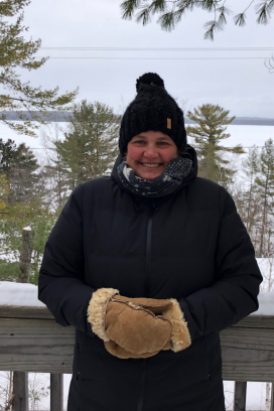
Dr. Aimée Classen is an ecosystem ecologist who studies how warming and environmental change reorganize ecological communities and alter the flows of carbon, water, and nutrients through ecosystems. Her central question is simple. When the environment changes, what actually determines how an ecosystem responds? Much of the answer, developed across two decades of work, lies in hidden biological interactions, particularly the partnerships between plants and fungi that shape soil carbon storage and mediate how ecosystems reorganize in a warming world, often appearing stable above ground while changing substantially beneath it.
Her lab combines long-term experiments, field studies, global research networks, and ecological synthesis to understand how ecosystems are changing and what those changes mean for the movement of carbon, water, and nutrients through the biosphere. This includes coordinated research across nine mountains on five continents through the Warming and Removal in Mountains (WaRM) network, which she leads to explore how dominant plants and warming interact to shape ecosystem function over time.
As Director of the University of Michigan Biological Station, Aimée leads one of the largest and longest-running field research campuses in the country, spanning more than 13,000 acres, over 140 buildings, and 117 years of continuous environmental records, and supporting more than 1,000 researchers, students, and visitors each year. Since 2020 she has secured $17 million in university investment to modernize the Station, developed the first strategic plan in its history, and grown research activity by more than 40 percent while broadening the community to include engineers, data scientists, public health researchers, artists, and writers alongside field biologists. She convened more than thirty faculty to launch the Winters Institute, a cross-college effort examining how changing winters reshape our landscapes, infrastructure, and health. Under her direction UMBS is becoming not a field station affiliated with the University, but a campus-wide platform for interdisciplinary research, immersive education, and public engagement, guided by a single question. What can a field station be, and how can it serve science and society 50 and 100 years from now?
Dr. Classen was named a Fellow of the American Association for the Advancement of Science for transformative contributions to ecosystem science and for leadership advancing a sustainable future. She was also elected a Fellow of the Ecological Society of America in recognition of her contributions to global change ecology, international scientific collaboration, and service to the field, and was named a Promising Young Scholar by the US National Academy of Sciences Frontiers in Science Program (2007 & 2014). She has received mentoring awards from her U-M department, the Department of Energy, and the Association for Women Soil Scientists, reflecting a longstanding commitment to supporting the next generation of ecologists.
Originally from Kinston, North Carolina, Aimée spent her childhood swimming in the ocean and developed a passion for ecology while studying a wildlife ecology unit in high school. Some of her favorite moments still happen along the shores of Douglas Lake after a day in the field, talking science, exploring ecosystems, and helping students see ecological connections in new ways.
Fields of study
Ecosystem ecology, environmental change, nutrient and carbon cycling, plant-soil interactions, biodiversity
Graduate students
Aadia Moseley-McCloud; Ariana Di Landro; Brenda Hernandez; Giovanna Munoz-Gonzalez; Ronan Montgomery-Taylor
Post doc
Olivia Vought
Research team
Karin Rand (research & lab manager); Isabel Thornberry (research tech)