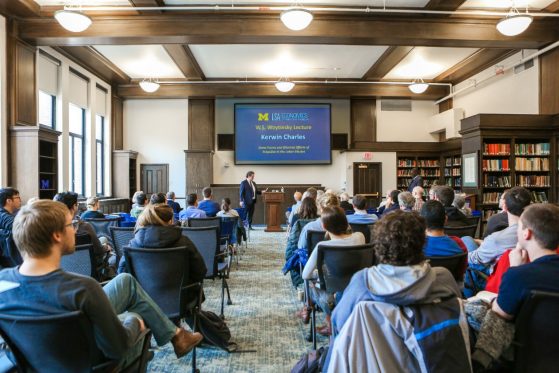
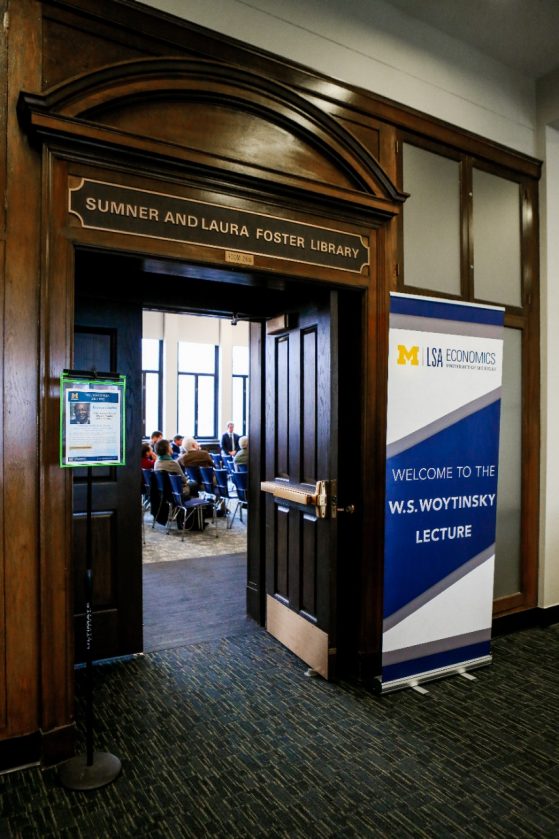
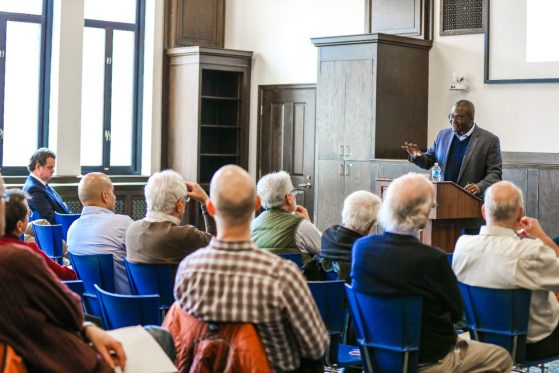
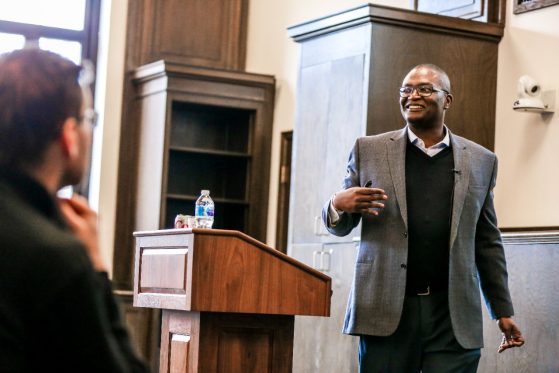
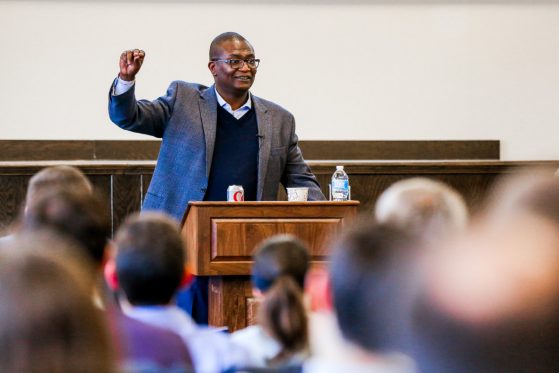
This lecture is given by the recipient of the W.S. Woytinsky Lectureship Award. The award recognizes a person who has made outstanding contributions in the field of economics.
Wladimir Woytinsky was a distinguished economist who is considered one of the architects of the US Social Security system. He was born in Russia in 1885. He was active in the underground movement against the Tsar and was exiled to Siberia in 1908, where he wrote economic and political tracts. After the Russian Revolution he became a part of Lenin’s inner circle, but escaped to Georgia, and later Germany, when Lenin turned against him. After emigrating with his wife, Emma, to the United States in 1933, he worked as an economist in Washington, including work as the principal economist on the Social Security Board, where he helped design the Social Security system and served until 1947. Woytinsky died in 1960.
Emma Woytinsky donated his books and papers to the University of Michigan library in 1962, and she donated the funds to create the Woytinsky Lectureship in 1963. Since its creation the Woytinsky Lecture has featured the profession’s most distinguished economists, beginning with a well-known lecture on human capital by Gary Becker in 1965.
University of Michigan Department of Economics
W. S. Woytinsky Lecture/Seminar Award (est. 1964)
| 2024 | Caroline M. Hoxby Scott and Donya Bommer Professor of Economics at Stanford University Director of the Economics of Education Program at the National Bureau of Economic Research Senior Fellow of the Hoover Institution and the Stanford Institute for Economic Policy Research "Affirmative Action: Logic, Measurement, and Evidence" |
| 2018 | Esther Duflo Abdul Latif Jameel Professor of Poverty Alleviation and Development Economics in the Department of Economics at the Massachusetts Institute of Technology and a co-founder and co-director of the Abdul Latif Jameel Poverty Action Lab (J-PAL) "Every Child Counts: Transforming education systems around the world" |
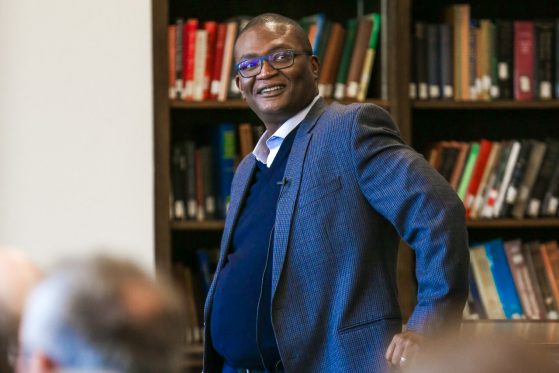
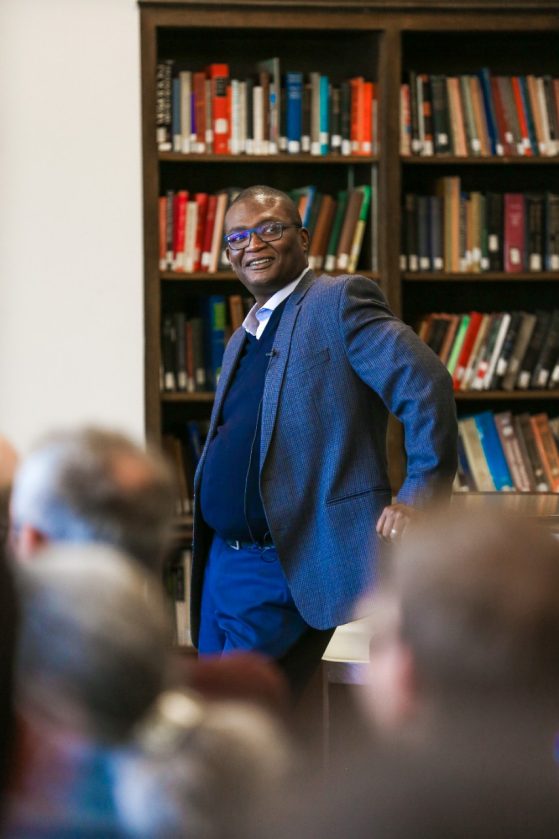
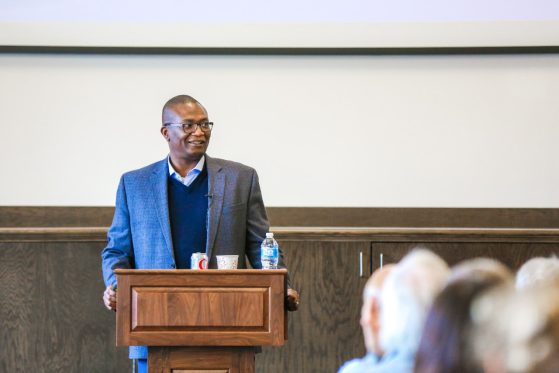
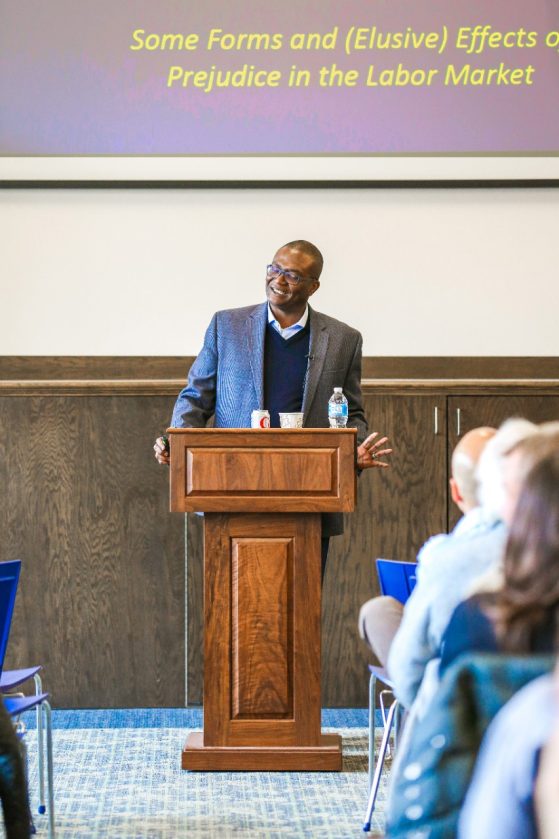
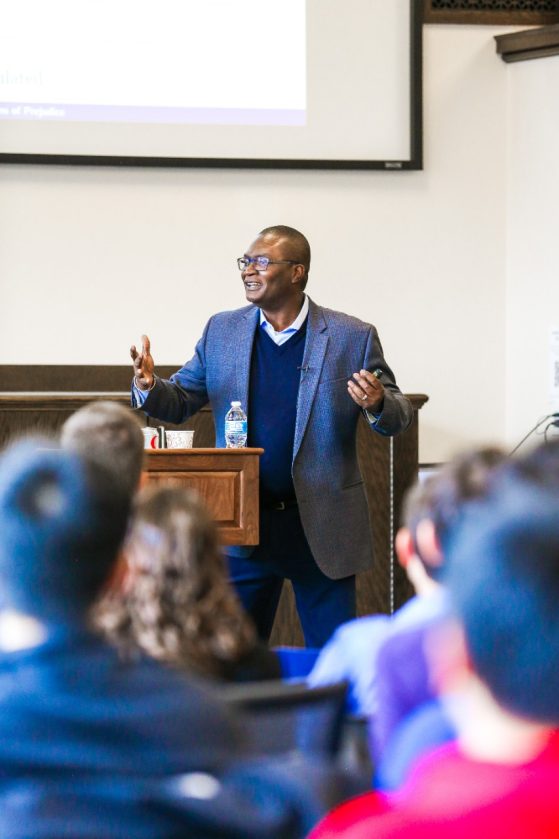
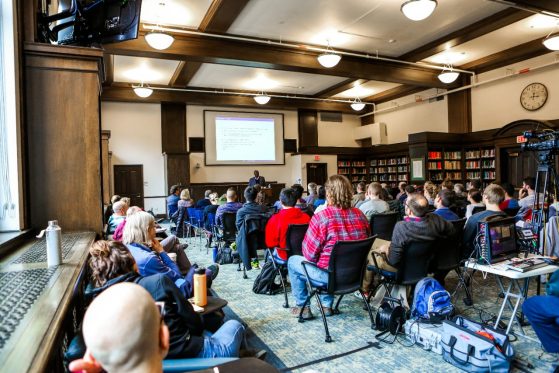
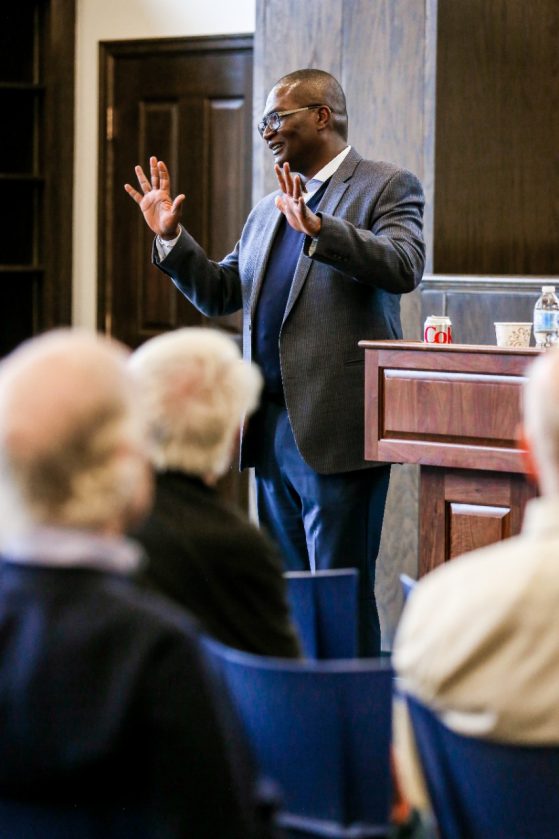
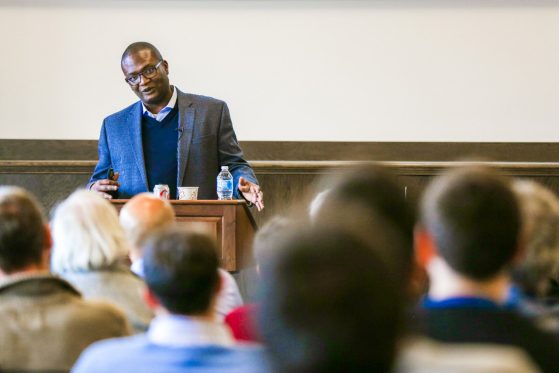
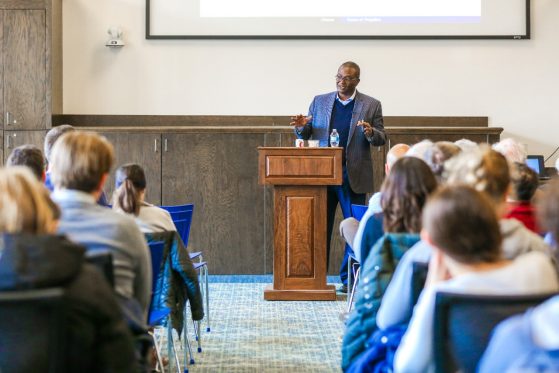
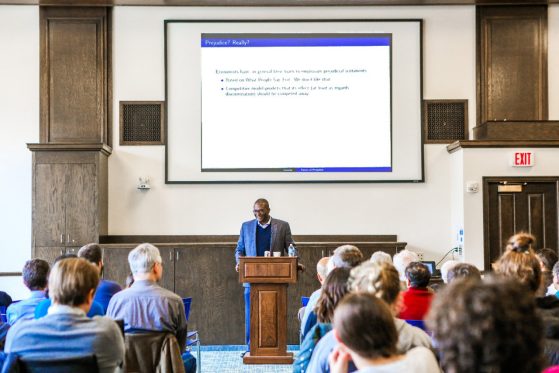
| 2018 | Kerwin Charles Edwin A. and Betty L. Bergman Distinguished Service Professor and former interim Dean University of Chicago Harris School of Public Policy "Some Forms and (Elusive) Effects of Prejudice in the Labor Market" |
| 2016 | Hal R. Varian Chief Economist “Google Tools for Data” “Economics & Technology: Careers Blending Two Fields” |
| 2014 | Professor Susan Athey Stanford School of Business Stanford University “The Internet and the News Media” |
| 2013 | Professor Robert Hall Hoover Institution and Department of Economics Stanford University “New Ideas about the Long-Lasting Collapse of Employment after the Financial Crisis” |
| 2012 | Professor Angus Deaton Princeton University “Randomized Controlled Trials and Economic Policy |
| 2011-12 | Professor David Card (Clark) Class of 1950 Professor of Economics Labor Studies Program Director, Center for Labor Economics Econometrics Laboratory (EML) Director University of California, Berkeley “Theory and Method in Empirical Microeconomics: Where Are We, and Where Are We Going?” |
| 2010 | Professor Larry Samuelson A. Douglas Melamed Professor of Economics Yale University "Common Learning" |
| 2009 | Professor Mark Gertler New York University A Model of Unconventional Monetary Policy |
| 2008 | Professor Jeremy Bulow Richard Stepp Professor of Economics Graduate School of Business Stanford University “Winning Play in Spectrum Auctions" |
| 2007 | Professor Ernst Fehr Chair for Microeconomics and Experimental Economic Research Faculty of Economics and Computer Science University of Zurich "Limited Rationality" |
| 2006 | Stephen Morris Princeton University “Coordination without Common Knowledge” |
| 2003 | Randall Wright University of Pennsylvania "A Unified Framework for Monetary Theory and Policy Analysis" |
| 2002 | Glenn Loury "Racial Stigma: Toward a New Paradigm for Discrimination Theory." |
| 2001 | Roger Noll Stanford University |
| 2000 | Elhanan Helpman Harvard University |
| 2000 | Claudia Goldin “The Power of the Pill: Oral Contraceptives and Women’s Career and Marriage Decisions” |
| 1999 | Christopher Sims Princeton University |
| 1999 | James Heckman (Nobel, Clark) University of Chicago |
| 1998 | John Sutton London School of Economics |
| 1998 | Roy Radner New York University |
| 1994-95 | Peter Diamond MIT |
| 1994-95 | Marty Weitzman Harvard University |
| 1993-94 | Paul Milgrom Stanford |
| 1993-94 | Tom Sargent Stanford |
| 1992-93 | Richard Blundell University College, London |
| 1992-93 | Robert Lucas Chicago |
| 1991-92 | Robert Barro Harvard University |
| 1991-92 | Jim Poterba MIT |
| 1989 | Professor Zvi Grilliches Department of Economics Harvard University |
| 1985 | Professor Arthur Goldberger University of Wisconsin “Modeling the Economic Family.” |
| 1981 | Professor Alan S. Blinder Princeton University |
| 1977 | Professor James N. Morgan Professor of Economics and Program Director University of Michigan |
| 1972 | Professor Alice Rivlin Brookings Institution “Social Policy: Alternate Strategies for the Federal Government” |
| 1967 | Professor Edward Denison Brookings Institution |
| 1965 | Professor Gary Becker Department of Economics Columbia University “Human capital and the personal distribution of income: an analytical approach” |