
CSAS Lecture Series | Revolutions Half-Made: The Political Effects of Education Expansion in India
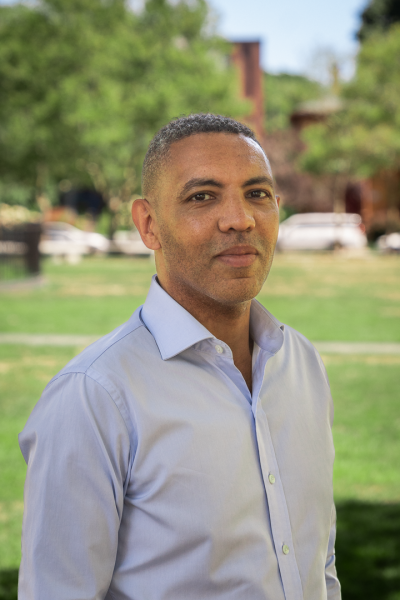
Emmerich Davies, University of Michigan
Please note: This lecture will be held in person and virtually on Zoom. The webinar is free and open to the public, but registration is required. Once you've registered, joining information will be sent to your email. Register for the Zoom webinar at:
https://myumi.ch/dg461
Over the last forty years, the Government of India has rapidly expanded access to primary education. As a result, India has achieved near-universal enrollment in education, previously a pox on India's social development record. At the same time, there has been an explosion in private education. What explains this double movement? I argue that the expansion of government education in a society marked by caste hierarchies has led to the exit of upper caste groups to private schools and a decrease in state-level public funding for governmentm education. Together, they help explain the case of Indian education that exhibits high enrollment, high aspirations, high private school access, and low quality.
Emmerich Davies is a research fellow at the School for Environment and Sustainability at the University of Michigan. He works on comparative politics with a regional focus on South Asia and comparative work in Latin America and sub-Saharan Africa. He is interested in the politics of service provision and bureaucratic politics. His work has been published in the British Journal of Political Science, Comparative Political Studies, and Governance, and his work has won awards from the Comparative and International Education Society. He received his Ph.D. and M.A. in political science from the University of Pennsylvania, and his B.A. in political science and economics from Stanford University.
Accommodation: If there is anything we can do to make this event accessible to you, please contact us at csas@umich.edu. Please be aware that advance notice is necessary as some accommodations may require more time for the university to arrange.
Over the last forty years, the Government of India has rapidly expanded access to primary education. As a result, India has achieved near-universal enrollment in education, previously a pox on India's social development record. At the same time, there has been an explosion in private education. What explains this double movement? I argue that the expansion of government education in a society marked by caste hierarchies has led to the exit of upper caste groups to private schools and a decrease in state-level public funding for governmentm education. Together, they help explain the case of Indian education that exhibits high enrollment, high aspirations, high private school access, and low quality.
Emmerich Davies is a research fellow at the School for Environment and Sustainability at the University of Michigan. He works on comparative politics with a regional focus on South Asia and comparative work in Latin America and sub-Saharan Africa. He is interested in the politics of service provision and bureaucratic politics. His work has been published in the British Journal of Political Science, Comparative Political Studies, and Governance, and his work has won awards from the Comparative and International Education Society. He received his Ph.D. and M.A. in political science from the University of Pennsylvania, and his B.A. in political science and economics from Stanford University.
Accommodation: If there is anything we can do to make this event accessible to you, please contact us at csas@umich.edu. Please be aware that advance notice is necessary as some accommodations may require more time for the university to arrange.
| Building: | Tisch Hall |
|---|---|
| Website: | |
| Event Type: | Lecture / Discussion |
| Tags: | Asian Languages And Cultures, India, political science, Politics, South Asia |
| Source: | Happening @ Michigan from Center for South Asian Studies, International Institute, Asian Languages and Cultures |
