
2026 Fellows
Leinweber Postdoctoral Fellows

I am originally from Barranquilla, Colombia, where I completed my undergraduate degree in Physics at Universidad del Atlantico. I later moved to Mexico to pursue my graduate studies at UNAM. My research uses the large-scale structure of the Universe to investigate fundamental physics. I am especially interested in what cosmological observations can tell us about neutrino properties, dark energy, and gravity. My work combines analytical modeling, perturbation theory, and statistical methods with data from large galaxy surveys, including DESI. I recently joined the LITP as a Leinweber Postdoctoral Fellow, where I will work with Professor Dragan Huterer and his group.

I am a postdoctoral research fellow at the Leinweber Institute for Theoretical Physics at the University of Michigan, working with Professor James D. Wells. My research takes a two-pronged approach spanning particle cosmology and particle phenomenology. On the cosmology side, I study the physics of the early Universe, with interests in dark matter, primordial black holes, phase transitions, baryogenesis, and gravitational waves. On the phenomenology side, I develop and study neutrino phenomenology and dark sector model building with an emphasis on fixed-target experiments, exploring how new physics can be probed in current and future experiments.
Before joining Michigan, I completed my Ph.D. in Physics at the University of Pittsburgh, followed by a postdoctoral appointment at Texas A&M University. I received my undergraduate degree in Engineering Physics from IIT Bombay. I enjoy working at the interface of particle physics and cosmology, where theoretical ideas can be connected to experimental and observational probes. I am excited to be part of the vibrant research community at the Leinweber Institute and look forward to collaborating on a broad range of questions in fundamental physics.
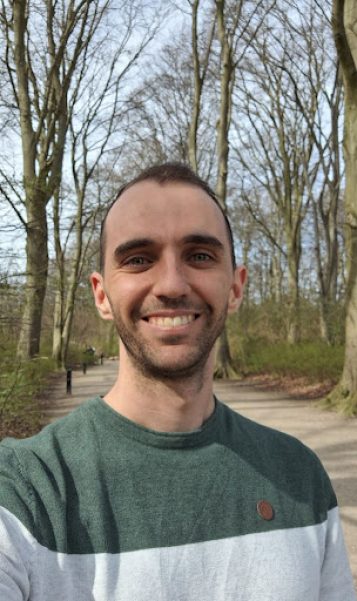
Having grown up in New Jersey, I started my physics career as an undergraduate at Princeton University followed by grad school at Yale University with a PhD advised by Prof. David Poland. I have been a postdoc at the Institut des Hautes Études Scientifiques in the greater Paris area since then. In my research, I study quantum field theories at the intersection of analytic and numerical work. Much of my research has focused on studying conformal field theories using bootstrap methods: by expressing physically-motivated axioms and assumptions as numerical optimization problems solvable with supercomputing clusters, we can derive sharp determinations of physically-meaningful observables. Or in simpler terms: we can attack abstract and opaque math with supercomputers to directly tell us things about physics as concrete as the way water boils.
Outside of physics, I’ve played trombone in essentially every kind of context — orchestras, jazz bands, marching bands, pit orchestras, laptop orchestras, etc. I’m also in the process of getting back into running more seriously. has been active and enthusiastic in teaching in his time at Yale, having taught every semester with stellar evaluations and taking part in Poorvu center programs such as its course on scientific teaching. Finally, in the realm of politics and policy, Rajeev has been a leading activist in the city of New Haven. With the community advocacy group New Haven Rising, he has worked together with city officials and community leaders to organize efforts, such as phonebanking to get out the vote for the 2020 presidential election.
Leinweber Graduate Fellows
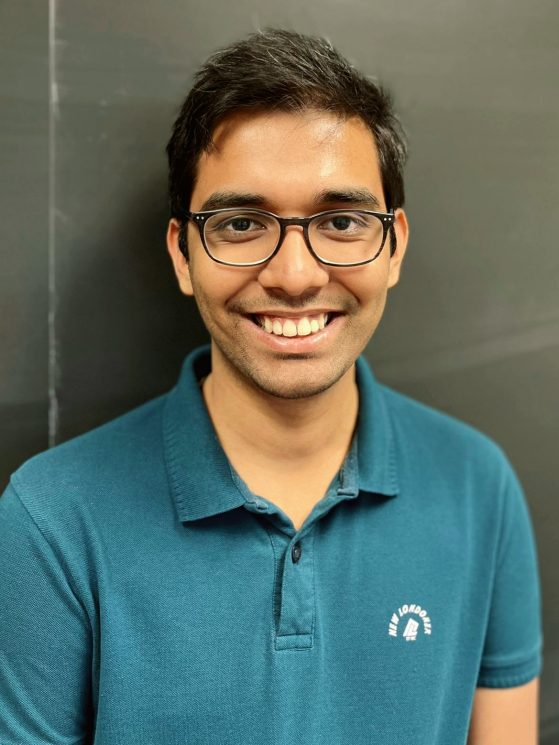
I am a graduate student in physics at the University of Michigan, where I work with Prof. Leopoldo A. Pando Zayas. Before coming to Michigan, I was affiliated with Beijing Normal University. My research interests lie in quantum aspects of black holes, supergravity, and the AdS/CFT correspondence. In particular, I am interested in near-extremal black holes, quantum corrections to their thermodynamics, and related questions in holography. My recent work has explored universal logarithmic corrections in near-extremal black hole thermodynamics, and one-loop effects in holographic transport. More broadly, I am interested in how symmetry, effective field theory, and holography help organize quantum gravity. Outside of physics, I am a big fan ofbadminton.
Summer Research Awards
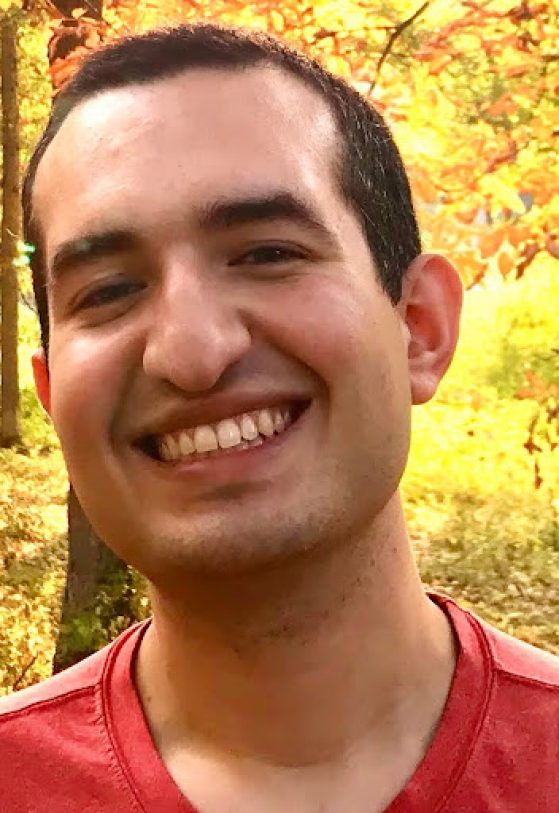
Hi! I am a second-year student advised by Professor James Liu. I’m from southeast Michigan and completed my undergraduate degree at Xavier University, where I studied Physics and Mathematics. I am fascinated by the beautiful mathematics that can be used to describe the physical world and am excited to further explore the connection between gravity and gauge theories by examining the interplay of the fortuity mechanism and the giant graviton expansion in bosonic matrix models this summer. When I’m not in the office, you will find me either reading a book, playing board games, or at the gym.
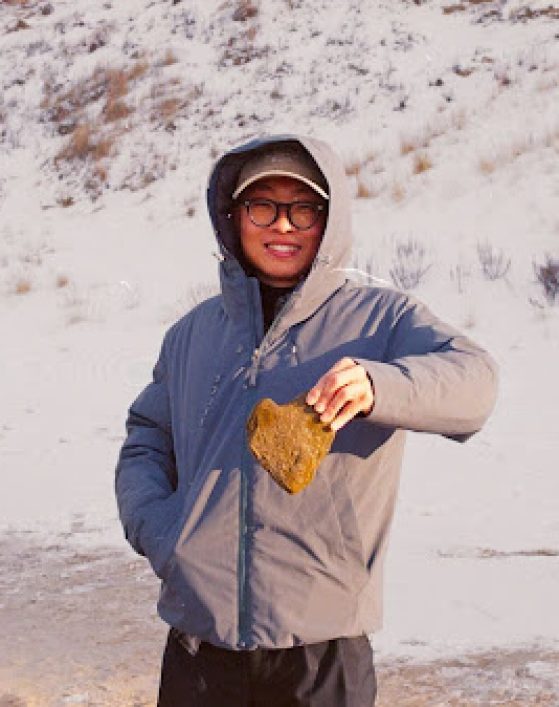
I grew up in Walled Lake, Michigan and attended the University of Michigan for my undergraduate studies, where I majored in physics and mathematics. I am now a third-year PhD student working with Professor Aaron Pierce. In general, my research focuses on early universe cosmology and particle phenomenology. My current work involves weak-scale dark sector models, in which processes such as co-annihilation and co-scattering play a critical role in determining the evolution of dark matter and its relic density. I am grateful for the generous support provided by the Leinweber family and look forward to making meaningful contributions to the field. Outside of physics, I am an active runner, weightlifter, and enjoy playing volleyball during the summer.
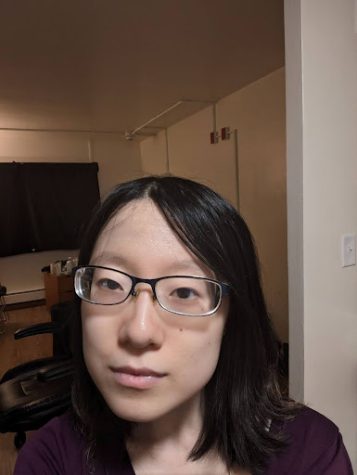
I am a PhD candidate working with Professor Ratindranath Akhoury on questions at the intersection of quantum field theory, gravity, and quantum information, with a particular interest in black hole physics. I received dual physics and mathematics bachelor's degrees from MIT. Outside of research, I co-host and co-produce the philosophy podcast Two Observers Walk Into a Bar, where we discuss foundational questions concerning consciousness, ethics, and cognition.
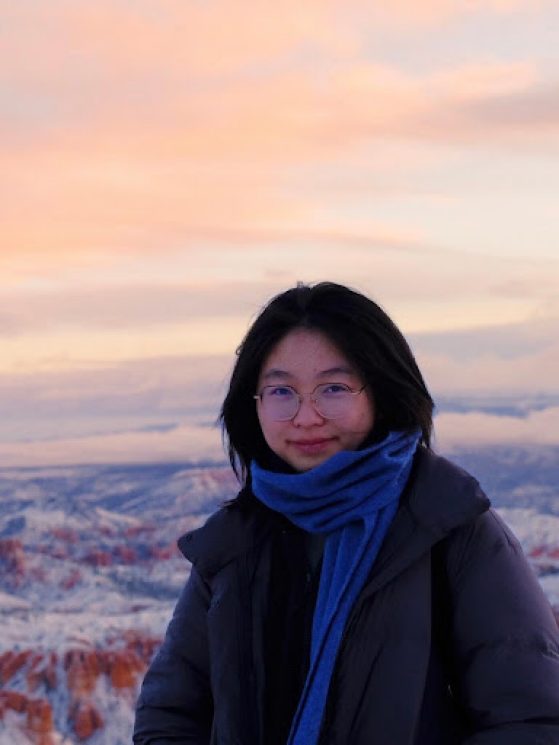
I am a second-year graduate student working in cosmology with Dragan Huterer. Originally from Brazil, I completed my undergraduate studies at Minerva University, where I had the unique opportunity to live and study across four countries—the United States, South Korea, India, and the United Kingdom—over the course of four years. During this time, I explored a range of topics including condensed matter physics, astrophysics, and experimental dark matter searches.
After graduating, I worked at Argonne National Laboratory on computational cosmology, an experience that strongly influenced my decision to pursue cosmology in graduate school.
My current research focuses on supernova cosmology, with particular emphasis on understanding the effects of peculiar velocities and their connection to large-scale anomalies such as the kinematic dipole anomaly. I am also a member of the DESI (Dark Energy Spectroscopic Instrument) collaboration, which is at the forefront of mapping the large-scale structure of the universe to constrain dark energy and cosmological parameters.
Beyond research, I am deeply committed to education and outreach. I co-founded a nonprofit organization in Brazil, STEM para as Minas, which has been active since 2019 and works to provide STEM education opportunities to low-income students. Outside of physics, I enjoy painting, reading fiction, and occasionally trying out a new sport.

Eddie Aljamal is a fifth-year Ph.D. candidate in theoretical cosmology working under the supervision of August Evrard. In parallel with his doctoral research, he is pursuing graduate certificates through the Michigan Institute for Data Science (MIDAS) and the Michigan Institute for Computational Discovery and Engineering (MICDE), with an emphasis on deep learning, representation learning, and AI-driven equation discovery.
His research focuses on improving mass estimates of galaxy clusters—an essential ingredient for accurately characterizing the dark matter halo mass function (HMF). The HMF is a cornerstone observable in cosmology, providing stringent constraints on cosmological parameters and a powerful test of fundamental theories of gravity.
Eddie’s work aims to quantify and reduce uncertainties in cluster mass inference by disentangling the roles of formation history and baryonic physics, including processes such as active galactic nucleus (AGN) feedback.
In a complementary line of research, Eddie is developing a data-driven framework for parsimonious, automated discovery of partial differential equations, bridging modern machine learning with fundamental physical modeling.

I am a 2nd year physics PhD student working with Prof. Camille Avestruz . My work is focused on studying the growth and evolution of galaxy clusters, and using them to probe the large-scale structure of the universe, as well as non-standard Dark Matter interactions in these systems. Born and raised in Gaborone, Botswana, I originally came to the USA to complete my undergraduate studies at the University of Chicago with a BSc in Astronomy and Astrophysics. Currently, I am proud to serve on the executive board of the National Society of Black Physicists Willie Hobbs Moore chapter here at the University of Michigan where we strive to create a supportive community for under-represented members of the physics community, as well as cultivate interest in physics in the wider Ann Arbor community. Outside of academia, I am a Brazilian Jiu-Jitsu practitioner and soccer player when the Michigan weather allows.

I am a second-year student working with Prof. Finn Larsen. Originally from Gurgaon, India, I completed a dual BS-MS degree at the Indian Institute of Science Education and Research (IISER), Pune, and subsequently worked as a student researcher at the Tata Institute of Fundamental Research (TIFR), Mumbai. I am currently studying the thermodynamics of supersymmetric black holes through holography and exploring novel techniques for computing Euclidean gravitational path integrals in asymptotically flat spacetimes. A deeper understanding of black hole physics using various approaches may provide valuable insights into quantum gravity and the mathematics that describes it through intersubjective verification. My other research interests include the application of quantum information theory to black hole physics and the connections between low-dimensional geometry and physics.
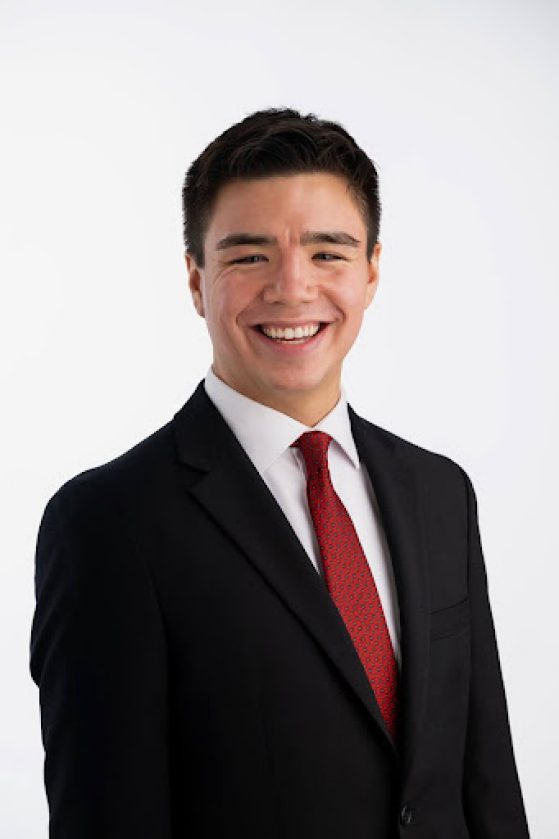
I am a first-year PhD student working with Camille Avestruz. Originally from Akron, Ohio, I completed my undergraduate degree in astrophysics from Ohio University in 2025. My previous work includes projects on the thermal state of the intergalactic medium during the epoch of reionization in simulations and on cosmological parameter estimation from the non-linear regime of galaxy clustering and lensing in DESI. Currently, I am using DESI data to measure the clustering of damped Lyman-alpha absorbers (DLAs), which trace galaxy formation and evolution. Constraints on the clustering signal of DLAs will better inform treatment of these absorbers in future analyses of the Lyman-alpha forest, which helps us understand the large-scale structure of the universe. Outside of research, I enjoy reading, participating in science outreach, and playing board/card games with friends.
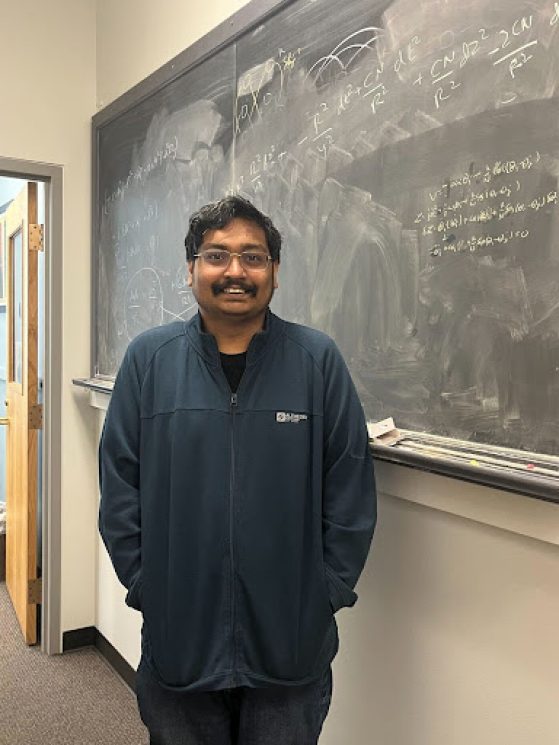
My name is Deric Jones and I am a cosmologist currently finishing up my third year of my PhD working with Professor Camille Avestruz. Originally from Virginia, I moved to upstate New York for my Bachelor’s and Master’s degree in Physics from Rensselaer Polytechnic Institute. Here at Michigan, my work revolves around galaxy clusters and their dark matter halos, particularly how we model their shape and measure their masses across photometric signals in preparation for upcoming surveys such as the Vera C. Rubin Observatory. I am heavily involved in the LSST Dark Energy Science Collaboration (DESC), primarily in the Clusters Working Group, helping to develop tools, test pipelines, and run analyses on simulation data. Additionally, I have a strong passion for teaching physics and computation. Outside of cosmology, I enjoy reading, writing, biking, and playing tabletop games with friends.

I am a fourth year student working with Prof. James T Liu. I grew up in the south Indian state of Kerala and obtained my undergraduate degree from the Indian Institute of science education and research (IISER) at Pune. My research is centered on understanding various aspects of the AdS/CFT correspondence. One of the projects that I am working on is to understand higher derivative invariants in supergravity which are essential for precision holography. I also study a quantity called the superconformal index.This is a protected object which captures important features of the underlying system and can be understood both from the gravitational and field theory side. Besides physics, I am interested in watercolor painting, pencil drawing and also enjoy classical music.
