
EIHS Workshop: Re/Imagining Pre/Colonial Space: (Speculative) Mapping and Layered Methodologies
Lara-Marie Frick, Gabrielle Ione Hickmon, and Ezequiel Martin Parra, Eric Toups (moderator)
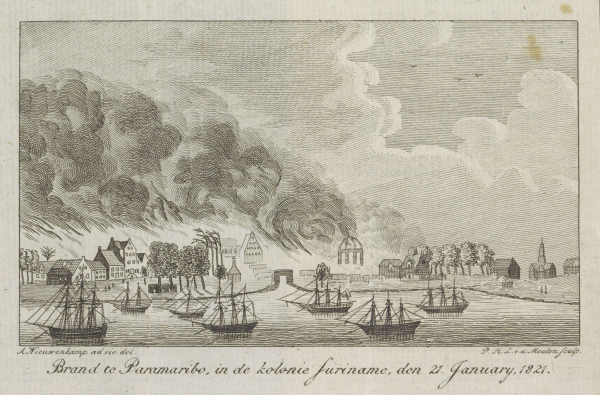
Mapping, though putatively about space, reveals much more about subjectivity and power. To take one example, British maps of 19th century Lagos Island produced by various imperial agents in the overlapping contexts of colonial expansion, enslavement, and war reflect a colonial agenda positing the urban center as blank space. In order to write a history of 19th century Lagos which centers its Indigenous and African inhabitants and their everyday experiences, Ademide Adelusi-Adeluyi supplements such maps with an embodied “walking cartography” and oral histories of the colonized, creating rich “speculative maps” of the city. Adelusi-Adeluyi’s scholarship grapples with central spatial-historical questions such as: What arguments do, or might, maps make? What revelations do illustrated, oral, spatial, and other kinds of sources provide which the written record does not? How might speculative research methods fill gaps left by power asymmetries exposed in the archival record? What are possible ways to read indigenous history, movements, and knowledge in the physical environment? This panel is inspired by the possibilities that arise from such a “social and spatial reading” of “an incomplete and sometimes fragmentary archive,” in the particular context of pre-colonial or colonial urban history broadly conceived, including examples of “internal colonization”.
The Eisenberg Institute for Historical Studies welcomes paper submissions from graduate students working on urban history, architecture, mapping or spatial studies, digital humanities, and/or embodied methodologies. We especially encourage scholarship which centers the perspectives of non-dominant historical actors in creative and critical ways.
This event presented by the Eisenberg Institute for Historical Studies. It is made possible in part by a generous contribution from Kenneth and Frances Aftel Eisenberg.
The Eisenberg Institute for Historical Studies welcomes paper submissions from graduate students working on urban history, architecture, mapping or spatial studies, digital humanities, and/or embodied methodologies. We especially encourage scholarship which centers the perspectives of non-dominant historical actors in creative and critical ways.
This event presented by the Eisenberg Institute for Historical Studies. It is made possible in part by a generous contribution from Kenneth and Frances Aftel Eisenberg.
| Building: | Tisch Hall |
|---|---|
| Event Type: | Workshop / Seminar |
| Tags: | Anthropology, History, Humanities, Immigration, Interdisciplinary, International, Social Sciences, Sociology |
| Source: | Happening @ Michigan from Eisenberg Institute for Historical Studies, Department of History |
The Thursday Series is the core of the institute's scholarly program, hosting distinguished guests who examine methodological, analytical, and theoretical issues in the field of history.
The Friday Series consists mostly of panel-style workshops highlighting U-M graduate students. On occasion, events may include lectures, seminars, or other programs presented by visiting scholars.
The insitute also hosts other historical programming, including lectures, film screenings, author appearances, and similar events aimed at a broader public audience.
