
The Human Odyssey on the Roof of the World: Adaptations and Resilience on the Tibetan Plateau
Dr. Yuchao Zhao, Assistant Curator of East Asian Anthropology, Field Museum of Natural History, Chicago
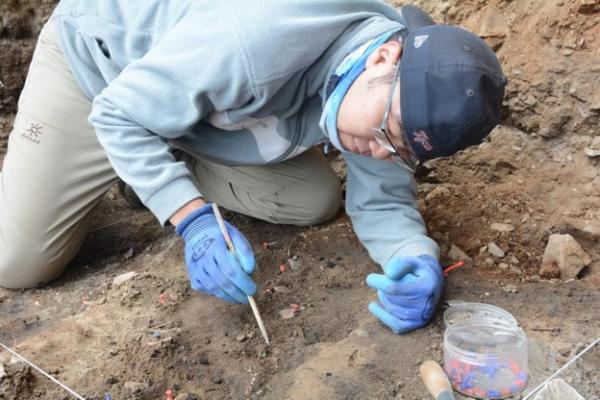
The Tibetan Plateau—often described as the “Roof of the World”—represents one of the most extreme environments ever inhabited by humans. With an average elevation exceeding 4000 meters, the region poses formidable challenges including hypoxia, harsh climate, and highly variable ecological productivity. Understanding how and when humans successfully adapted to these conditions remains a central question in high-altitude archaeology. This talk synthesizes recent archaeological, paleoenvironmental, and genetic research to reassess the long-term history of human occupation on the Tibetan Plateau. Evidence from Paleolithic sites indicates that foraging populations began exploring the plateau margins as early as the Middle Pleistocene, with increasing evidence for sustained human presence during the Late Pleistocene and early Holocene. Rather than viewing the plateau as permanently settled only after the arrival of agriculture and pastoralism, new research suggests that indigenous foragers played a crucial role in establishing viable lifeways in high-altitude environments.
| Building: | School of Education |
|---|---|
| Event Type: | Lecture / Discussion |
| Tags: | Anthropology, Archaeology |
| Source: | Happening @ Michigan from Museum of Anthropological Archaeology, Interdepartmental Program in Ancient Mediterranean Art and Archaeology, Research Museums Center, Archaeology at Michigan |
